Z-Curve MCB Manufacturer in China

Choosing the right circuit protection for sensitive equipment is NOT always easy. If the breaker reacts too slow, your expensive devices pay the price. If it trips too easily for no real reason, your whole line stops – and you’re left explaining to your boss or clients why the shipment is delayed. We’ve seen both cases. Neither is fun.

That’s why we developed the Z-Curve MCB to give you a simple answer. It detects faults quickly and cuts power at the right moment. Your systems stay protected. And those frustrating nuisance trips that waste your time and money? They become a rare exception, not a daily headache.

Whether you are building control panels, managing electrical projects, or looking for a long-term OEM partner – our Z-Curve MCB adapts to your needs, not the other way around. We work with you to make sure it fits, because we know every project is a little different.

  • ISO
  • CB
  • CE
  • SAA
  • RoHS
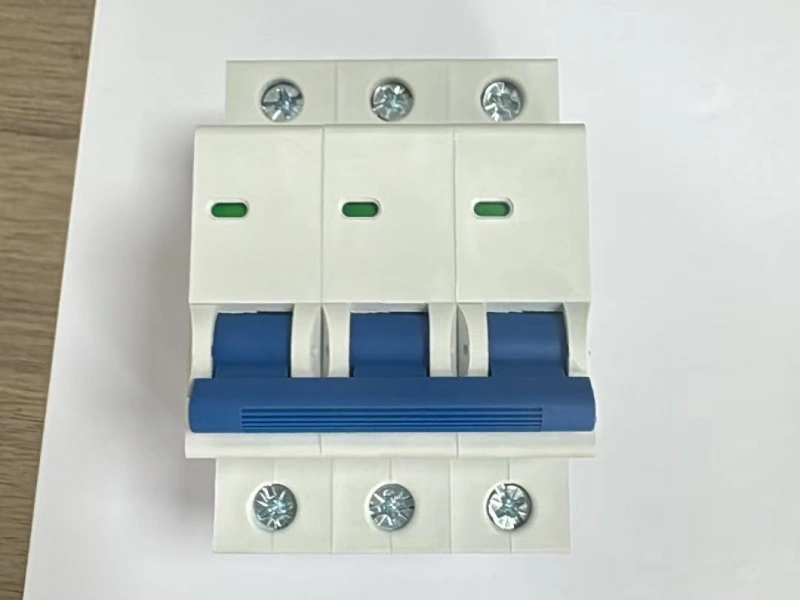
Front view of a white three-pole circuit breaker with a single blue handle linking three switches. It features three sets of screw terminals at the top and bottom, and three small green indicator windows, with the label 'Z63' printed above the leftmost window.

Key Specifications

The Numbers That Matter for Your Setup

No one likes flipping through dense spec sheets. Here are the core parameters of our Z-Curve MCB — clear and easy to match with your project requirements.

What Is a Z Curve MCB?

If you haven‘t worked with a Z Curve MCB before, you’re not alone. It‘s not as common as B or C Curve breakers — in fact, many of the local factories around us here in China don’t even produce them, and some have never even heard of them. So let‘s clear that up.

A Z Curve MCB is simply a miniature circuit breaker that responds faster than standard ones. It‘s built for systems where even a brief overcurrent can damage sensitive components — think control panels, automation gear, or precision electronics.

Like any MCB, it offers both thermal and magnetic protection. The thermal part handles prolonged overloads. The magnetic part reacts instantly to short circuits. What sets the Z Curve apart is its magnetic trip threshold — it’s set lower and reacts sooner, so it catches faults before they can do real harm.

For you, this means fewer damaged boards, less unplanned downtime, and more confidence in your system‘s day-to-day operation. It’s not about having more protection — it‘s about having the right protection for the equipment that actually runs your business.

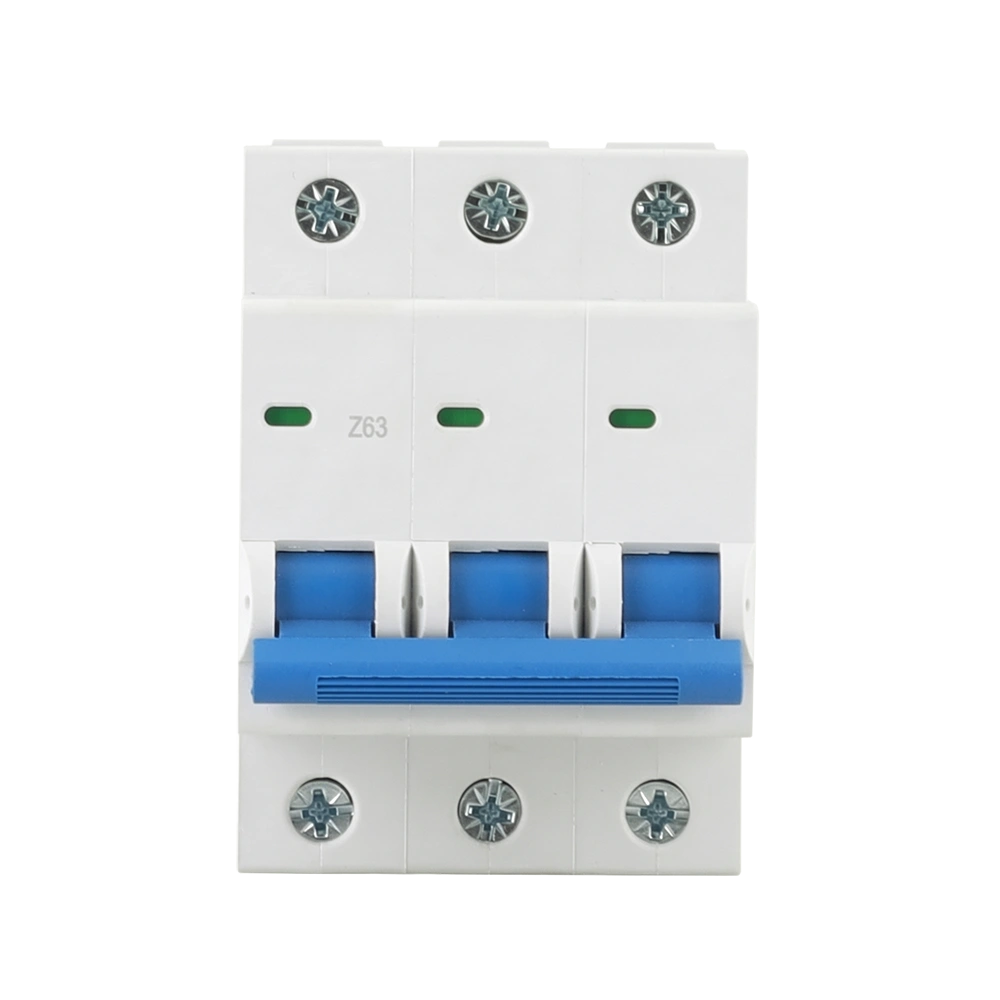
White 3-pole miniature circuit breaker with a blue linked handle, six screw terminals, and three green indicator windows. Z-curve, Z63 label.

Performance Characteristics

Not every electrical application requires the same level of protection. Understanding how different trip curves respond to faults helps you choose an MCB that matches your equipment, operating conditions, and protection requirements.

Reading the Trip Curve

The graph shows how our Z Curve MCB responds to faults. The bottom axis represents fault current — how much higher it is than the rated current. The vertical axis shows how quickly the breaker trips.

You’ll notice two stages. For moderate overloads, the thermal protection kicks in — the bigger the overload, the faster it trips. For short circuits, when the current reaches 2–3 times the rated value, the magnetic protection reacts almost instantly.

That‘s the Z Curve’s sweet spot: fast enough to protect sensitive electronics, without the nuisance trips that waste your time.

1 2 3 5 10 Multiples of Rated Current (I / In) 1000s 10s 0.1s 0.01s Tripping Time t (s) Type Z Zone (2 ~ 3 In) Thermal Tripping Zone Instantaneous Magnetic Protection Overload / Short-circuit Threshold

Z Curve vs B / C / D

The table below gives you a straight comparison across the four curves. We‘ve highlighted the Z column so you can see at a glance where it stands out — and where it doesn’t. Because honestly, no breaker is perfect for everything. You just need the one that‘s right for your situation.

Comparison Z Curve B Curve C Curve D Curve
Instantaneous Trip Range 2–3 × In 3–5 × In 5–10 × In 10–20 × In
Sensitivity ★★★★★
Highest
★★★★☆
High
★★★☆☆
Medium
★★☆☆☆
Low
Trip Speed Fastest
Millisecond response
Fast Moderate Slower
Inrush Current Tolerance Low Moderate High Very High
Typical Applications PLCs
Control Panels
Instrumentation
Semiconductor Equipment
Lighting Circuits
Socket Circuits
Commercial Buildings
General Distribution
HVAC
Motors
Transformers
Welding Equipment
Risk of Nuisance Tripping High in Motor Circuits Low Very Low Minimal
Recommended For Sensitive electronic equipment requiring fast fault isolation. Lighting and long cable runs. General commercial and industrial circuits. Loads with high startup or inrush current.

Where Z Curve MCBs Perform Best?

How do you know if you actually need a Z Curve MCB? Here‘s a simple rule: if your equipment is sensitive, expensive, and hard to replace — and if a random trip would cost you more than a faulty circuit — then this curve deserves a close look. The applications below are where we see it deliver the most value. See if any of them match your project.

Why Work With Us?

You‘re not just looking for a box of MCBs. You’re looking for an expert who solves your problem, delivers on time, backs up their products, and actually picks up the phone when something comes up. Here‘s what we offer — and what it means for your day-to-day.

What Affects the Price of a Z-Curve MCB?

Every project has different technical and purchasing requirements. The following factors have the greatest impact on the final quotation for a Z Curve MCB.

Customer Stories

We don‘t just ship standard products. Sometimes a customer comes to us with a requirement that isn’t in any catalog. Here‘s how we worked with one client to get it right — not on the first try, but on the one that counted.

Custom Low Heat Z-Curve MCB for a Swedish EV Charging Station Manufacturer

  • Industry: EV Charging Infrastructure
  • Location: Sweden
  • Product: Custom Z-Curve MCB

The Challenge

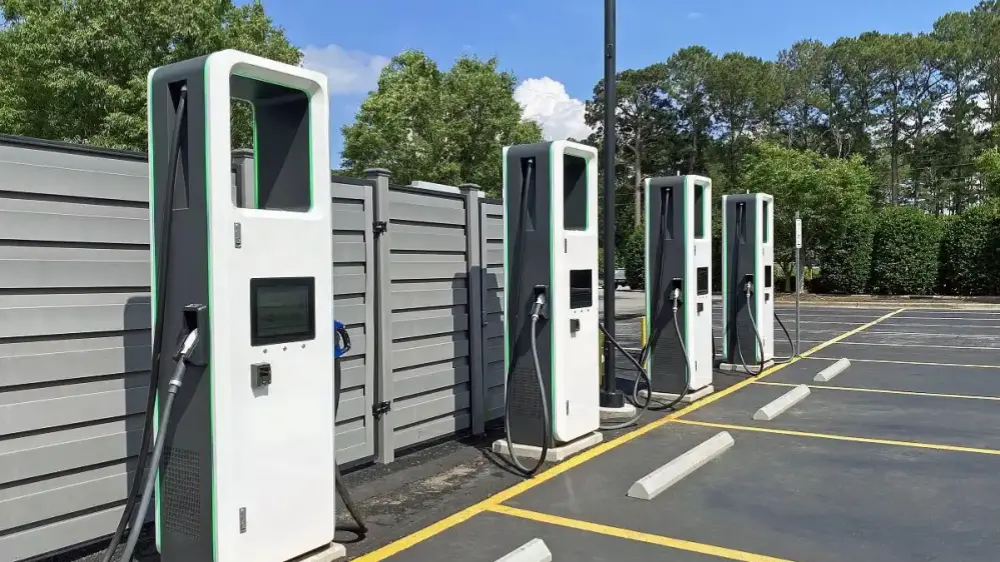
Our client is a Swedish EV charging station manufacturer. Their chargers run in compact enclosures with high ambient temperatures and continuous 63A load — so heat buildup is a real concern. They needed a Z-curve MCB that could handle the current without turning their enclosure into an oven.

Original Technical Specifications:

  • Configuration: 3 Poles
  • Rated Current (In): 63 A continuous load
  • Trip Characteristic: Curve Z (magnetic trip 2-3 x In, or preferably anywhere between 100-160 A)
  • Sizing: Standard DIN-size
  • Core Challenge: Specified low heat dissipation at 63 A continuous load.
  • Cost & Thermal Optimization: The thermal element was optional to reduce cost and lower heat
    dissipation, or could be replaced with a higher-rated element (e.g., 80 A/100 A) to manage heat.

Our Approach

Round 1: Remove the Thermal Element

To hit their heat target, our R&D team took an unconventional approach: we removed the bimetallic thermal overload element entirely and kept only the magnetic trip mechanism. This lowered internal resistance and cut heat generation significantly.

The client tested the first sample in their lab. They liked what they saw — but they also found room for improvement. Here‘s their feedback:

“We did some power-dissipation tests, and it performs at about 4.2 W per pole at 63 A which is pretty good. At 10 A, most of the power-dissipation (59 %) came from the actual contact point which we also easily damaged by high current breaking since it has ball form, small contact area and seem to have thin layers of contact protective materials. Calculating from measurements at 63 A the contact point generates roughly 40 % of the heat dissipation.

The inner parts of the MCB looks sturdy and well dimensioned. Coil with flat conductor looks good. Braids are thick or doubled. So, I think the construction looks very good… Could anything be done to the contact point? Specially making it sturdier for long time use…

As of now, I like the samples. Sure, the heat-dissipation in the contact point is higher than expected, but the lifespan of the contact point is very important to us.”

Their message was clear: the overall design was solid, but the contact point needed to be tougher — both for heat and for long-term durability.

Round 2: Change the Contact

We took their feedback seriously. If the contact point was generating 40% of the heat and also showed signs of wear from short-circuit testing, that’s where we needed to focus our efforts.

We went back to the drawing board on the contact point and made two specific upgrades:

  • Geometry Transformation: We replaced the original ball-shaped contact with an inverse radius design on a thick welded contact point, matched with a slightly smaller outer radius on the contact arm. This created a wider, more stable face-to-face contact area.
  • Material & Coating Enhancement: We switched to a premium anti-arc, anti-welding alloy and thickened the protective coating — so the contact can handle repeated short-circuit stresses over years of use.

The Result

We shipped the second sample with the changed contact design to Sweden. The client ran the same power-dissipation tests they had done the first time — so the comparison would be apples to apples.

“Yes, thank you! We have tested the new sample with better contact and it performs 15-20 % better heat wise, which is quite a lot and in our application where heat matters a lot. This is important. So I think we are happy technically now and can move on to the next step.”

A 15–20% improvement in heat performance — from a customer who already thought the first version was “pretty good.” That’s the kind of outcome we aim for.

Key Outcomes at a Glance

  • 15% - 20%

    Reduction in Contact Heat Dissipation

  • 2-3x In

    Precise Magnetic Tripping Protection

  • Enhanced

    Contact Lifespan & Short-Circuit Survival

FAQs

Here are answers to the questions we hear most often — especially from engineers who are new to Z Curve or comparing it with other options.

Ready to Get Started?

Have a question or a need we can help with? Send us a message — our product manager will reply within 24 hours with a tailored solution.