
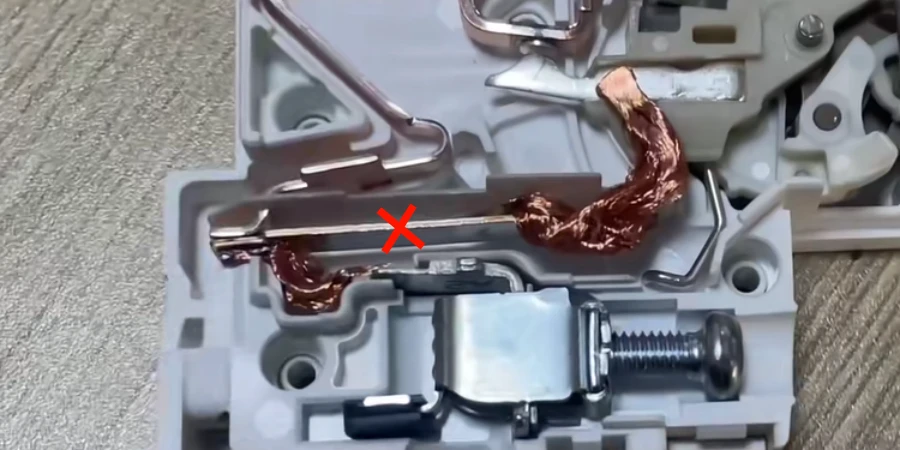
At first, this topic sounds a little strange. A circuit breaker without overload protection? Is it really still a circuit breaker? And more importantly, would anyone actually need one?
The answer is yes — but only in specific situations. There are code-recognized cases where overload protection can be left out, while short-circuit and ground-fault protection still need to be addressed.
So this isn’t about finding a loophole or simply removing a protection function. It’s about understanding what protection the circuit actually needs, and why. Once you understand the logic behind it, it becomes much easier to tell when this type of protection strategy makes sense — and when it doesn’t.
Overload vs Short Circuit: Two Different Problems
Let’s separate the two terms first.
An overload happens when a circuit draws more current than it’s rated for, over a sustained period. Think of a motor pulling extra current because it’s mechanically strained, or too many devices plugged into one line. The wire heats up slowly, and if nothing interrupts it, insulation breaks down and you get a fire risk over time.
A short circuit or ground fault is a completely different event. Current jumps from thousands of amps to tens of thousands in a fraction of a second, because a live wire has found an unintended path, often straight to neutral or ground. There’s no slow buildup here. The breaker has to react in milliseconds, not minutes.
This distinction matters because a circuit breaker can be built to catch one, both, or neither of these events. A standard thermal-magnetic MCB does both jobs at once: the thermal element handles overload, and the magnetic element handles short circuits. Remove the thermal element, and you get what’s usually called a magnetic-only breaker, still fully rated for short-circuit interruption, but blind to a slow current creep.
| Event | Cause | Response Time | Typical Protection Element |
|---|---|---|---|
| Overload | Sustained excess current | Seconds to minutes | Thermal (bimetal) element |
| Short circuit / ground fault | Sudden fault path | Milliseconds | Magnetic (instantaneous trip) element |
Codes generally treat these as separate protection requirements. You can be exempted from one without touching the other, and that’s exactly where our topic today lives.
When Interrupting the Circuit Is the Real Hazard
The clearest case for skipping overload protection is when shutting the circuit down is more dangerous than letting it run hot.
NEC 240.4(A) covers this directly, and the textbook example is a fire pump. If the pump trips on overload in the middle of a fire, the building loses water pressure exactly when it needs it most. So the code allows the overload protection to be removed, as long as short-circuit and ground-fault protection stays in place.
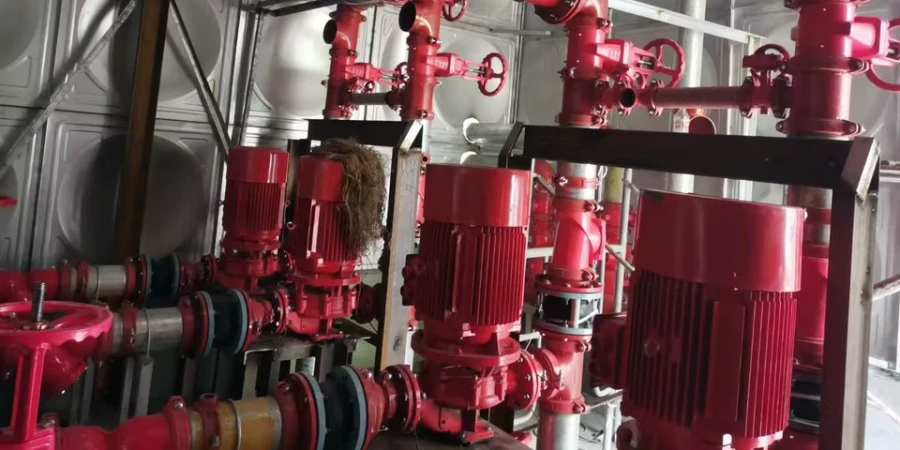
The logic here is simple: a motor that overheats can potentially be repaired, but a fire that spreads unchecked cannot be undone. That trade-off is written into the rules around overcurrent protection, and it’s worth understanding even if you never touch a fire pump circuit.
Once you see this logic, you start recognizing it in other places. Any circuit where a nuisance trip creates a bigger safety problem than the overload itself is a candidate for this exemption. That’s why the same principle extends to a whole category of life-safety and safety-service circuits, which I’ll get to in a moment.
Loads That Physically Cannot Overload the Circuit
The second major case is simpler in concept: if a load’s normal operating current cannot exceed the conductor’s rated capacity, there may be no overload condition for overload protection to address.
A fixed resistive heating element is a typical example. Think of a fixed electric heater, an immersion heater, an oven heating element, or an industrial heating element. Once its rated voltage is applied, its current is largely determined by its resistance. Unlike a motor, it does not normally have a starting current or changing mechanical load that can cause the current to rise significantly during operation.
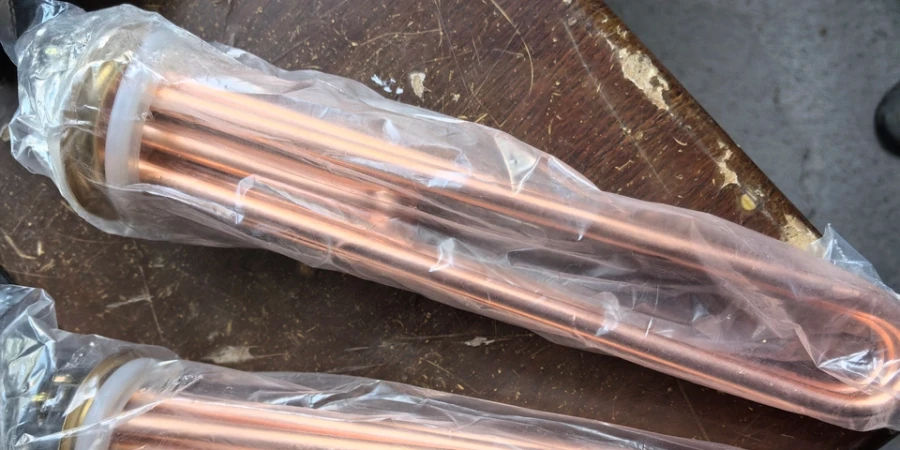
For example, a 2 kW heating element supplied at 230 V draws about 8.7 A under normal conditions. If the circuit conductors are rated to carry that current with the required margin, the heating element itself does not create the kind of variable overload condition you would expect from a motor or other changing load.
Under BS 7671 Regulation 433.3.1, this principle can extend to certain situations where overload protection is not required because the conductor is already effectively protected by another device, or because the distributor’s equipment provides the necessary protection up to the relevant point in the installation.
In other words, you do not necessarily need to duplicate overload protection when an upstream device is already providing the required protection for that section of conductor. This is one reason layered protection is common in UK and IEC-based installations.
| Situation | Why Overload Protection May Not Be Needed |
|---|---|
| Fixed resistive load with a predictable operating current | The load does not normally create a variable overload condition |
| Supply-side device already protects the conductor | Additional overload protection may be unnecessary if the existing device provides the required protection |
| Distributor’s equipment protects the conductors up to the relevant point | Protection is already provided upstream |
The important point is that this is not a blanket exemption for every heater or fixed load. You still need to verify the actual load characteristics, conductor rating, and protection arrangement against the applicable wiring rules. The fact that a load is called “fixed” does not, by itself, mean overload protection can be omitted.
Motors and Life-Safety Circuits
Why motor circuits split protection into two devices
Motors deserve their own section because people mix up two different devices here constantly. The branch-circuit breaker on a motor circuit, the one handling short-circuit and ground-fault protection, is not the same thing as the motor’s overload protection. Those jobs are usually split.
Overload protection for the motor itself comes from a separate overload relay, or from a motor that’s internally thermally protected and marked “Thermally Protected” (TP). If neither of those exists, you still need standalone overload protection somewhere in the circuit. This split is spelled out clearly in NEC Article 430 guidance on overcurrent protection, and it trips people up because they expect the branch breaker to cover everything.
Life-safety and safety-service circuits
BS 7671 Regulation 433.3.3 lists a set of circuits where losing power unexpectedly is worse than letting the equipment run through an overload.
A few examples: the exciter circuit of a rotating machine, the supply to a lifting magnet, the secondary circuit of a current transformer, circuits feeding fire-extinguishing devices, fire and gas alarm circuits, and life-support medical equipment on an IT system in medical locations.
In every one of these, the reasoning circles back to the same idea from the fire pump example: don’t let a protective device create a bigger hazard than the one it’s guarding against. You can read the full regulation breakdown here if your project touches any of these categories.
Why We Started Building Magnetic-Only Breakers?
For years, everything we shipped from our workshop near Yueqing was standard B, C, or D curve MCBs, the kind every electrical engineer already knows how to spec. The first time a client asked for a breaker without a thermal element, I honestly had to double-check what he actually needed.
He is a EV charging manufacturer, and he explained that his circuit already had a separate component handling overload protection elsewhere in the design. What mattered to him was heat. Every bit of heat the MCB itself generated was heat his enclosure had to manage, and thermal elements generate heat as a side effect of doing their job. So we removed it.
That request turned into what’s generally called a magnetic-only circuit breaker. It still trips instantly on a short circuit or ground fault, exactly like a standard MCB, but it has no bimetal strip and no thermal trip curve.
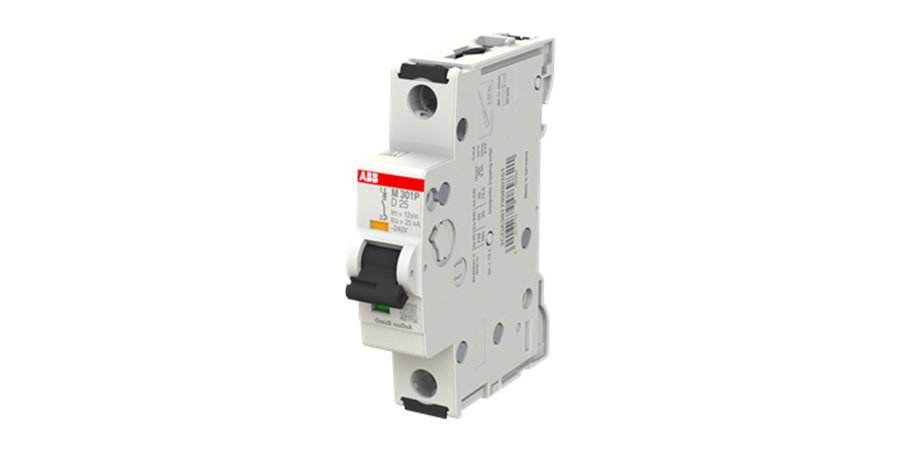
A few of the larger international brands carry this as a standing product line(e.g. ABB M300 P Miniature Circuit Breakers, Schneider GJL Mag-Gard Motor Circuit Protectors, Siemens 3VA1110-6MH32-0AA0, Eaton NZMN1-S100), but around our part of Yueqing, none of the smaller factories develop it as a catalog item. It’s not something you’ll find sitting on a shelf. Every unit we’ve made has started from a client’s specific request, and we build it to match.
Where magnetic-only breakers tend to show up
In our experience, this request comes almost entirely from newer applications rather than traditional ones.
EV charging is the clearest example, but we’ve had similar conversations with people building battery storage assemblies and specialized automation equipment, where thermal management inside a compact enclosure is just as important as the electrical spec sheet.
| Feature | Standard MCB (B/C/D curve) | Magnetic-Only MCB |
|---|---|---|
| Overload protection | Yes (thermal element) | No |
| Short-circuit protection | Yes (magnetic element) | Yes (magnetic element) |
| Heat generated by the breaker | Higher | Lower |
| Typical use case | General-purpose circuits | Circuits with separate overload protection already in place |
| Off-the-shelf availability (Yueqing small factories) | Common | Rare, usually custom-built |
If your design already handles overload somewhere else and heat is a real constraint, this is worth asking your supplier about directly.
We’ve built these for a handful of clients now, and if it’s something your project needs, it’s a conversation we’re happy to have.
Choosing the Right Approach for Your Circuit
Before deciding to drop overload protection from any circuit, it helps to walk through a short checklist rather than relying on a single rule of thumb.
- Confirm whether the load is genuinely fixed, or whether it has a startup surge or variable draw that could count as an overload on its own.
- Check if another device upstream, or built into the equipment itself, is already providing overload protection.
- Ask whether an unexpected trip would create a hazard bigger than the overload it’s meant to prevent.
- Confirm the applicable code for your project. NEC 240.4 and Article 430 apply in the US, while BS 7671 433.3 governs UK and many IEC-based markets, and the two don’t always line up exactly.
- If overload protection is skipped, verify that short-circuit and ground-fault protection is still specified. That part almost never goes away.
None of this replaces a proper review by a qualified engineer for your specific installation, but it should help you walk into that conversation already knowing which category your circuit falls into, and whether a magnetic-only breaker or a standard model is the better fit.
Final Thoughts
Understanding when overload protection can be omitted gives you more flexibility when specifying components for compact or safety‑critical designs.
It also helps you ask the right questions when talking to your supplier—about heat, coordination, and what the breaker actually needs to do in your specific application. That clarity saves time and avoids mismatches down the line.