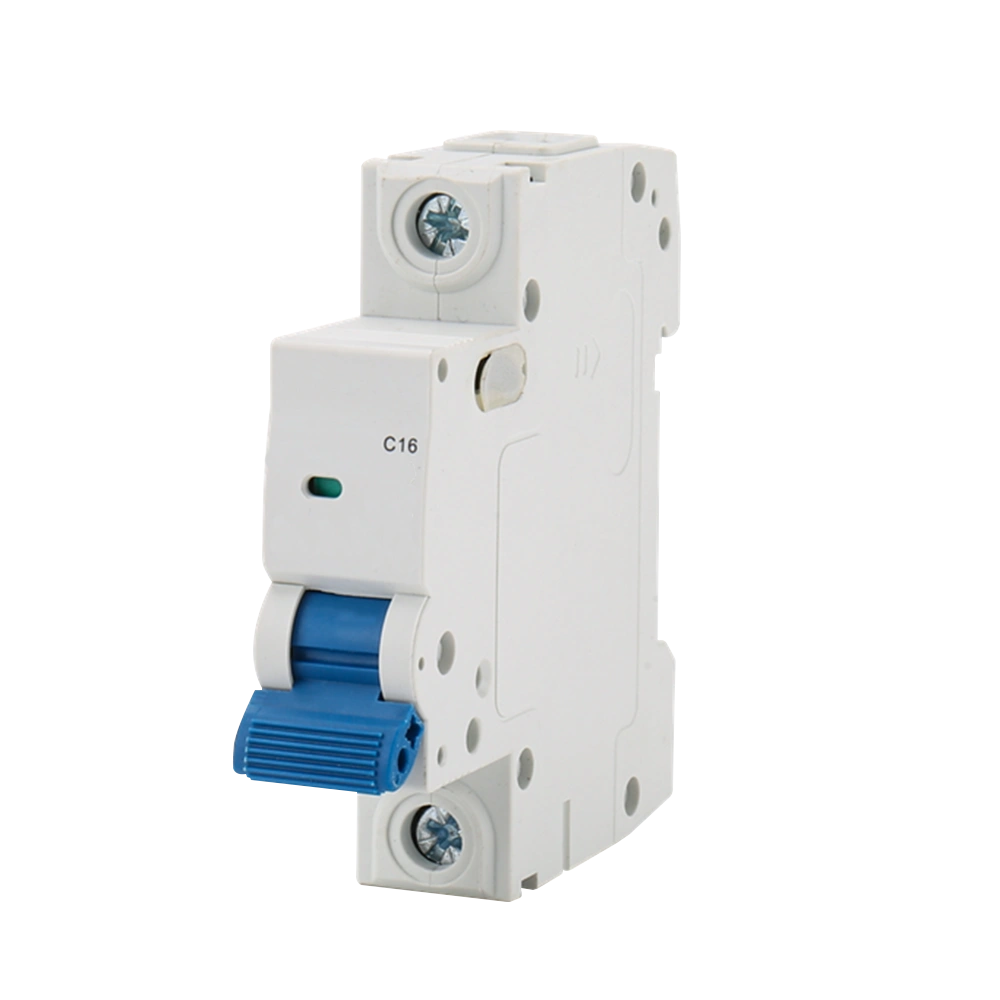
C Type MCB

C Curve MCB for Everyday Loads

If you work with distribution boards, you already have a go-to. The one you spec without thinking twice. The one that’s proven itself on job after job.

For a lot of you, that’s a C Curve MCB.

Not because it’s the newest or the most specialized. Because it’s the one that fits. It handles the mix of loads you actually see — lighting, sockets, controls, small power — without drama. It’s not trying to be clever. It just works.

And when you’ve been doing this long enough, that’s exactly what you want.

  • ISO
  • CB
  • CE
  • SAA
  • RoHS
Get Catalog

C Curve MCB Specifications

Key electrical and mechanical specifications for the C Curve MCB. Check the available ratings and configurations to find the right option for your application.

WHY C CURVE

Because Most Circuits Don't Behave Perfectly

Let's look at what actually happens on a typical circuit — and why C Curve MCBs are designed the way they are.

Stable Operation

What Normal Looks Like

Current on a typical circuit is never perfectly flat. Equipment cycles, loads shift, things change. These are normal variations — not faults. A good breaker knows the difference.

Moderate Inrush

The Startup Spike

When equipment starts, it pulls extra current for a split second. That's normal — it's just part of powering up. This brief surge is everyday operation, not a sign of trouble.

Balanced Protection

C Curve

The goal isn’t to let a circuit draw more current than it should. It’s to tell the difference between a normal startup surge and an actual fault. C Curve hits that sweet spot — tolerant enough to avoid nuisance tripping, fast enough to respond when it matters.

What Is a C Curve MCB?

In simple terms, it’s a miniature circuit breaker with a specific tripping characteristic — one that happens to fit a very wide range of everyday applications.

So when we say "C Curve MCB," we're talking about a breaker that handles real-world conditions — and does it well enough to be the default choice for most installations. Not fancy. Just dependable.

How Does a C Curve MCB Actually Work?

Let's look at what's happening inside the C curve breaker — and why it responds the way it does.

Reading the C Curve Tripping Chart

An MCB has two layers of protection. Thermal handles overloads. Magnetic handles short circuits — and that’s where the curve type matters.

As the chart shows, C Curve sits in the middle. The magnetic trip threshold is 5 to 10 times the rated current. Below that, the thermal zone allows temporary overloads to persist for a short time before tripping. Cross into the C Zone, and the magnetic protection responds instantly.

That middle position is exactly why C Curve works for so many applications. Not too sensitive. Not too sluggish. Just right for most circuits.

1 1.13 3 5 10 20 50 Multiples of Rated Current (I / In) 1000s 10s 1s 0.1s 0.01s Tripping Time t (s) Type C Zone (5 ~ 10 In) Thermal Tripping Zone Instantaneous Magnetic Protection Inrush Withstand / Short-circuit Limit

How C Curve Compares to B, D?

The difference between B, C, and D Curve comes down to one number: the magnetic trip threshold. Here's how that number changes the way each breaker behaves — and which one you should reach for.

Comparison C Curve (Standard Benchmark) B Curve D Curve
Instantaneous Trip Range 5–10 × In 3–5 × In 10–20 × In
Sensitivity ★★★☆☆
Balanced / Standard
★★★★☆
High
★★☆☆☆
Low
Trip Speed Balanced
Standard protection delay
Fast
Quick response to small faults
Delayed
Extended delay for high surges
Inrush Current Tolerance Moderate (Up to 5–10x In) Low (Up to 3–5x In) Very High (Up to 10–20x In)
Risk of Nuisance Tripping Low in general commercial/industrial distribution High when powering inductive or motor loads Minimal across almost all startup surges
Recommended For The primary default choice for general commercial and industrial circuits with moderate inrush currents. Residential and light commercial circuits supplying purely resistive or non-inductive loads. Heavy industrial applications subject to frequent, massive high-inrush startup currents.

Where Are C Curve MCBs Used?

You'll find them in all kinds of places — from residential distribution boards to commercial panels and industrial control cabinets. Here are some of the most common applications.

Why Licen for This Solution?

You're not just looking for a C Curve MCB. You're looking for a supplier that understands the application, gets the specification right, delivers consistently, and supports you when something needs attention.

Case Study

Here's a real example of how the right curve choice plays out in an actual installation.

Building Stable Circuit Protection for a Large Office Building

  • Industry
    Commercial Building / Office
  • Location:
    Netherlands
  • Equipment
    LED Lighting, Office Equipment, Socket Circuits, and Auxiliary Building Equipment
  • Project Stage
    New Office Building and Electrical Installation

Background

A commercial office building in the Netherlands was installing a new low-voltage electrical distribution system. The project covered multiple office areas, meeting rooms, common areas, and support spaces, with many separate circuits for lighting, sockets, and everyday office equipment.

Unlike a circuit supplying only one type of load, these systems can include different electrical devices. The building’s distribution system supplied LED lighting, computers, monitors, printers, chargers, and other office equipment.

The engineering team therefore needed an MCB suitable for general-purpose circuits. The goal was to provide reliable overload and short-circuit protection while allowing for short current peaks that can occur when some equipment is switched on.

The Challenge

The project included a large number of general-purpose circuits. The normal operating current of each circuit was relatively low, but different devices could produce short starting currents when they were switched on.

If the protection device was too sensitive to these short current peaks, switching on several devices at the same time could increase the risk of unwanted tripping. In an office environment, that means interrupted lighting, downed workstations, and wasted time.

Simply upsizing the MCB rating wasn’t the answer. The rated current still needed to match the circuit load and cable capacity. Increasing the rating just to avoid tripping could reduce the level of circuit protection.

The engineering team reviewed:

  • Normal operating current of each circuit
  • Types of connected loads
  • Short starting current from connected equipment
  • MCB tripping characteristics
  • Cable current-carrying capacity
  • Coordination with other protection devices
Circuit Assessment
  • Distribution Circuits80+
  • Typical Circuit Current6–20 A
  • Main LoadsLighting, Sockets, Office Electronics
  • Load CharacteristicsStable Operation + Short Starting Current

The assessment showed that most general-purpose circuits did not have very high starting currents. However, some lighting and electronic equipment could produce short current peaks when switched on.

The protection system therefore needed to provide a good balance between reliable circuit protection and normal equipment operation.

The Solution

After reviewing the circuits, the engineering team selected C Curve MCBs as the standard protection solution for most general-purpose circuits.

C Curve is a common MCB tripping characteristic for circuits with some starting current. Compared with a more sensitive tripping characteristic, it allows a higher short current peak during normal operation while still providing overload and short-circuit protection.

The MCB rating and number of poles were selected according to the requirements of each circuit. C Curve MCBs were used for lighting, socket, and general office equipment circuits.

For circuits with different load characteristics, the engineering team reviewed the electrical conditions separately rather than using the same protection configuration for every circuit.

The final solution provided:

  • A consistent protection solution for many general-purpose circuits
  • Better tolerance for normal short starting currents
  • Reliable overload and short-circuit protection
  • Appropriate MCB ratings for individual circuits
  • Compatibility with the standard DIN rail distribution system

Results

Before the building went live, the engineering team tested the main distribution circuits and checked the protection system under different operating conditions.

The main circuits using C Curve MCBs operated reliably, with no significant unwanted tripping during normal equipment startup.

For the project team, C Curve MCBs provided a practical protection solution for the different types of everyday electrical loads used throughout the building.

The project also reinforced something we see again and again: MCB selection should be based on actual circuit conditions — not just on the nameplate rating of connected equipment.

C Curve MCBs provided a simple and reliable protection solution for the different electrical circuits used throughout the building.

— Mark Jansen, Electrical Design Engineer

FAQs

Quick answers to the most common questions we get about C Curve MCBs.

Ready to Talk Details?

Every project is different. Tell us what you're working on — we'll help you find the right C Curve MCB configuration.