I grew up in Liushi, a small town under Yueqing City in Wenzhou, Zhejiang. Before I ever worked in this industry, I already knew what it looked like from the inside.
My neighbors ran small workshops. My classmates’ parents sold switches and terminals out of storefronts the size of a garage. When foreign customers in this industry talk about buying low-voltage electrical products from China, what they usually mean, whether they know it or not, is Liushi.
If you’ve ever wondered how one town became the center of an entire industry, here’s what I’ve seen and learned over the years.
How Liushi’s Electrical Industry Actually Got Started?
You might wonder why a town this size ended up producing so much of the world’s low-voltage electrical gear. The answer is a combination of timing, geography, and people — the right place, at the right time, with the right people.
In the early 1980s, when China’s reform policies started to loosen restrictions on private business, state-owned companies had little interest in small, low-margin products like circuit breakers and relays. That gap left room for someone else to step in, and Liushi’s local people took it.
A town built on family workshops
Liushi is considered one of the birthplaces of what people call the “Wenzhou model” — small, family-run businesses that grew fast because they could adapt quickly and didn’t wait around for permission.
One workshop might make plastic housings, another might wind coils, another might assemble finished breakers, while others specialize in testing equipment or the machinery used to make them. These businesses don’t operate in isolation. They complement one another, depend on one another, and often become each other’s customers and suppliers.
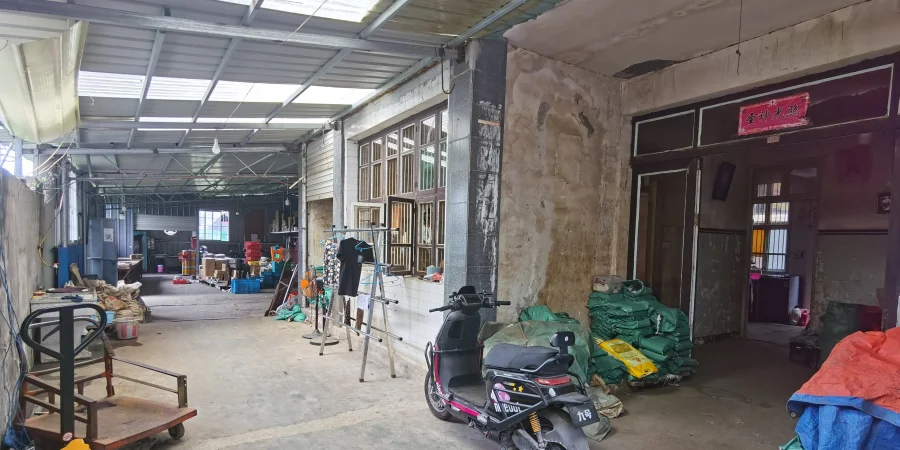
To give you a better sense of what this looks like on the ground, I took a photo of a small family-run workshop here in Liushi. What you’re seeing is the first floor of the family’s home. The area on the left has been extended and converted into a small workshop, while the right side remains a normal living space, with a dining table, a bathroom, and other everyday household facilities.
In other words, they don’t have to commute to work. They can get up in the morning, come downstairs, have breakfast, and start working almost immediately.
Over time, this created something closer to an assembly line spread across the entire town than one contained within a single building.
This matters for any customers looking for products from China today, because it explains why Liushi behaves so differently from a typical industrial city. There’s no single gatekeeper controlling supply. Prices stay competitive because everyone is watching everyone else. And because so many hands touch different parts of the process, the town built up a level of manufacturing know-how that’s hard to find concentrated anywhere else in the country.
| Feature | Typical Single-Factory City | Liushi Cluster Model |
|---|---|---|
| Supply chain structure | Vertically integrated within one company | Spread across thousands of specialized small firms |
| Price competition | Limited to internal cost control | Constant, driven by local rivalry |
| Flexibility for custom work | Often slow, requires large orders | High, smaller firms adapt faster |
| Risk of single-point failure | Higher | Lower, many alternative suppliers nearby |
From a Quality Crisis to Real Manufacturing Standards
Liushi didn’t become what it is today overnight. Like any industry, it had to go through its own growing pains.
In the 1980s and into the early 1990s, the town’s reputation actually took a hit. A wave of low-quality and sometimes outright fake electrical products came out of the region, and that drew both government crackdowns and serious pressure from the market itself.
If you talk to older business owners here, most of them remember this period clearly, because it’s the reason the industry looks the way it does now.
Why the quality push actually worked?
What happened next is the part that really shaped the entire cluster. The players that survived the crackdown didn’t just patch things up, they rebuilt around quality control, certification, and long-term brand building.
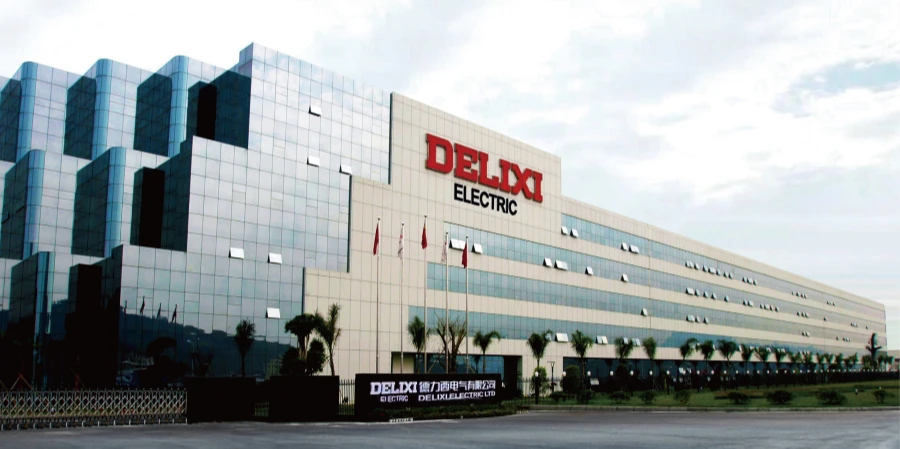
This shift is widely seen as the reason growth accelerated so sharply through the 1990s. Companies that started as small Liushi workshops, including Chint, Delixi, and People Electric, grew into the national names people recognize today, and their growth pulled the entire supporting supply chain up with them.
This history is also why local statistics can look surprising if you’re not familiar with the area. Liushi’s population sits at a little over 300,000, yet the number of registered businesses and small manufacturing operations here has passed 55,000.
That density isn’t accidental. It’s the result of thousands of small firms gradually building expertise, improving quality, and earning market trust, rather than one giant company dominating the industry.
| Period | Industry Reputation | Typical Business Focus |
|---|---|---|
| Early 1980s | Emerging, unregulated | Basic parts, low cost, low oversight |
| Late 1980s–early 1990s | Damaged by counterfeit issues | Government crackdowns, market correction |
| Mid-to-late 1990s | Rebuilding trust | Certification, brand investment, quality control |
| 2000s–present | Established, globally recognized | Export-ready, ISO and CE-certified manufacturing |
What Makes the Liushi Supply Chain Different From Everywhere Else?
A lot of buyers assume “Made in China” means the same thing no matter where the product comes from. Once you spend real time sourcing here, you realize how untrue that is.
Liushi’s advantage isn’t really about any one factory, it’s the entire ecosystem working together, and that’s something you can’t replicate by just building a bigger plant somewhere else.
Specialization at a level most regions never reach
The real strength of Liushi’s supply chain is not simply the number of suppliers, but how deeply each one specializes. Over decades, manufacturers have focused on increasingly narrow parts of the production process, building expertise, tooling, and production efficiency that would be difficult for a single factory to replicate on its own.
This level of extreme specialization allows even relatively small manufacturers to produce specific components quickly and cost-effectively, while giving buyers access to a remarkably broad range of products within the same local ecosystem.
Today, the town collectively covers hundreds of product categories and tens of thousands of models, spanning almost every major category of low-voltage electrical components a buyer might need.
I’ve talked with local factory owners who tell me the nearly same story almost every time. A few of them tried moving production to cheaper regions where labor and rent cost less. Within a year or two, most of them moved back. The lower costs elsewhere didn’t make up for what they lost, easy access to raw materials, experienced engineers, skilled assembly workers, and neighboring suppliers who could fill a gap on short notice. That kind of support network took decades to build here, and it doesn’t transplant easily.
Location matters, too. Liushi is close to major coastal ports, so manufacturers can scale up production and reach domestic and overseas customers without the long inland shipping times you might face elsewhere.
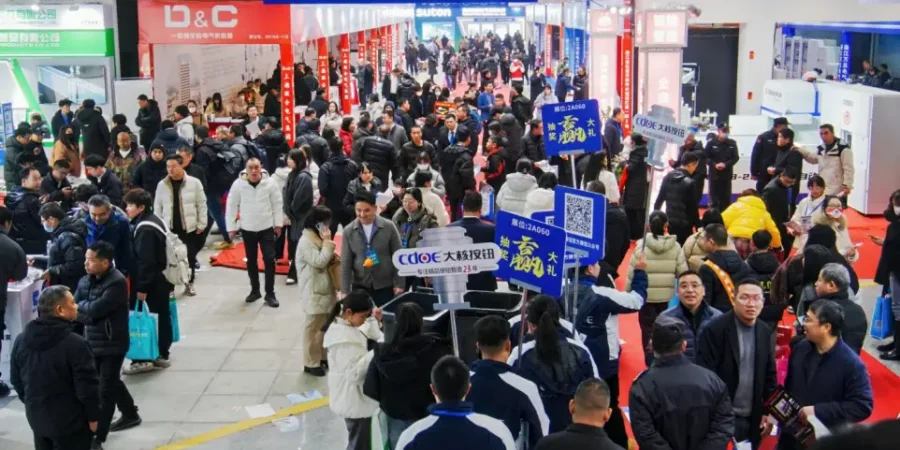
And then there’s the annual electrical expo, which has been held here since 2001. Every year, it brings suppliers, buyers, new products, and new ideas into the same local business network. That constant exchange is one reason Liushi keeps adapting and evolving instead of simply relying on what worked decades ago.
| Ecosystem Factor | What It Means for a Buyer |
|---|---|
| Extreme component specialization | Faster, cheaper production of niche parts |
| Skilled, experienced local labor | Lower defect rates, faster ramp-up on new orders |
| Dense supplier network | Quick sourcing of alternative parts if one supplier is delayed |
| Annual industry expo | Faster access to new components and technology trends |
| Coastal export access | Shorter shipping timelines to major global markets |
Why This Matters If You’re Sourcing Custom Electrical Components
None of this history is just background trivia.
It directly affects how a buyer should think about sourcing low-voltage electrical products, especially anything outside the standard catalog.
Liushi’s structure exists because thousands of small, specialized firms compete and cooperate at the same time, and that combination is exactly what makes non-standard work possible here in the first place.
The real advantage isn’t price, it’s flexibility
Large international brands can absolutely produce standard breakers at scale, but there’s one thing buyers can’t ignore: the price. You’re paying not just for the breaker itself, but also for the brand, global distribution network, R&D, testing, certification, and after-sales support that come with it.
For some projects, that premium is worth paying. But when you’re buying thousands of standard breakers, it can make a big difference to the final cost. I’ve had customers come to us specifically because the ABB products they were buying had gone up in price, and they were looking for a more competitive alternative.
That’s where Liushi’s structure really starts to make sense. You’re not limited to one global brand’s pricing or product range. You have hundreds of manufacturers around you, each specializing in different products and price points. And that choice becomes even more valuable when you need something that isn’t sitting on a standard catalog page.
A buyer who needs a specific trip curve, an unusual rated current, or a housing modified for a niche application usually runs into the same wall with the big brands: MOQs that don’t fit the project, tooling costs that don’t make sense for a mid-size run, and lead times measured in months rather than weeks. Local statistics on the region’s output suggest Liushi alone accounts for a majority share of China’s low-voltage electrical production, which gives buyers real choice among suppliers rather than being locked into one factory’s terms.
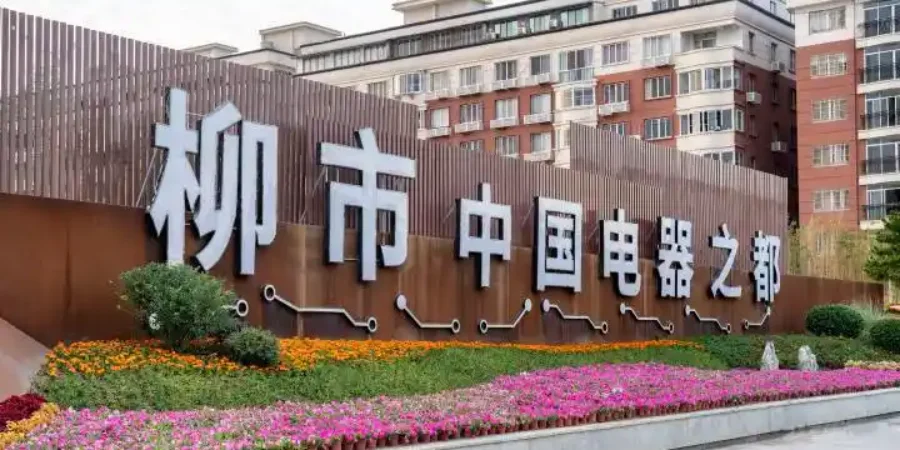
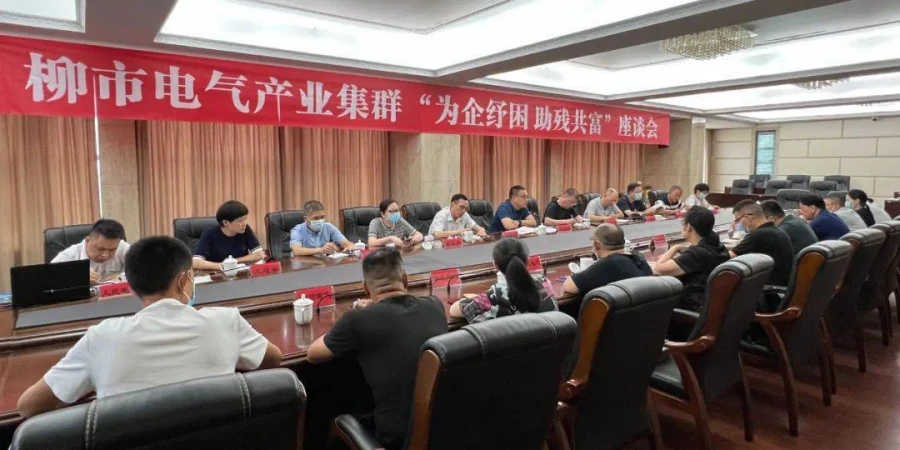
Government support has played a role too. Local and provincial authorities eventually got behind the private sector here, backing infrastructure, industrial parks, and formally branding the town as China’s electrical capital. That recognition helped pull in more investment, more skilled workers, and better logistics providers, which reinforced everything the private firms had already built on their own.
For me, the value of sourcing from Liushi isn’t simply that you can get a better price. It’s the ability to find the right supplier for the job, whether you’re buying a standard breaker by the container or developing something that doesn’t exist in a catalog yet.
After decades of building this industry, Liushi has something that’s difficult to reproduce elsewhere: the people, suppliers, skills, and relationships needed to make all of those pieces work together. That’s what turned a small town into a global sourcing hub for low-voltage electrical components.
Final Thoughts
That’s the part that’s hardest to explain on a spec sheet. It’s not just about unit price or lead time—it’s about having a town’s worth of specialists within walking distance, all of whom have been doing this for decades.
For anyone sourcing from China, that kind of ecosystem changes what’s possible on a project. And honestly, it’s why I still work here.