
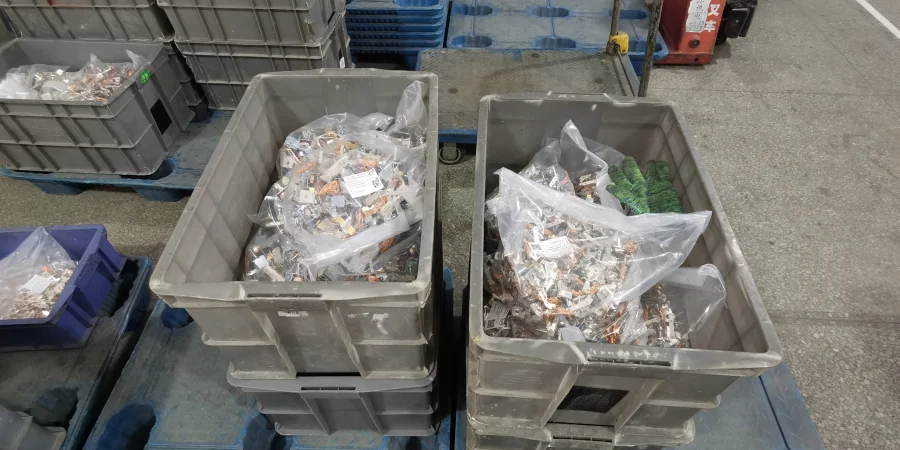
If you are planning to import components from China and assemble the products locally, one of the first things you need is a reliable parts supplier.
If you have been importing finished products and selling them in your local market, moving to local assembly will bring different challenges. This also means your expectations and requirements for a parts supplier will be different.
Based on our experience supporting customers with local assembly projects, we would like to share some practical advice to help you choose the right parts supplier.
Is the Supplier Willing to Support Component Supply?
First, there is one very practical question you need to confirm: Is the supplier willing to provide the product as components for local assembly? Although this question may sound obvious, it is not always the case.
In most situations, customers do not start by looking for a factory that specializes in supplying components. They first find a manufacturer that can produce the product they need, and then ask whether the manufacturer is willing to supply the product in SKD/CKD form so they can assemble it locally.
For a supplier, supplying components is not the same as supplying finished products. There are more individual parts to deal with, and pricing, BOM confirmation, packaging, and follow-up management all become more complicated. Compared with this, producing and selling finished products is much simpler and easier. Therefore, not every factory is willing to support this type of supply model.
I once had a customer from India who had been buying finished ACBs from CHINT. Later, her company planned to start local assembly, so she contacted us to ask about the price of ACB components. She told me that she had previously discussed this issue with CHINT, but CHINT was not willing to provide the product in this way, so she had to look for another supplier.
So, if you have already decided to start local assembly, do not assume that a manufacturer who can produce the finished product will automatically be willing to supply the components. It is better to confirm this at the beginning of the project.
Can the Supplier Guide You Through the Assembly Process?
Once the supplier is willing to provide SKD/CKD components, there is another practical question to ask: Can the supplier guide you through the product assembly process?
Many customers who are just starting this business are not very familiar with product assembly. Especially for products with a slightly more complex structure, it can be difficult for their team to complete the assembly independently without proper training and systematic learning.
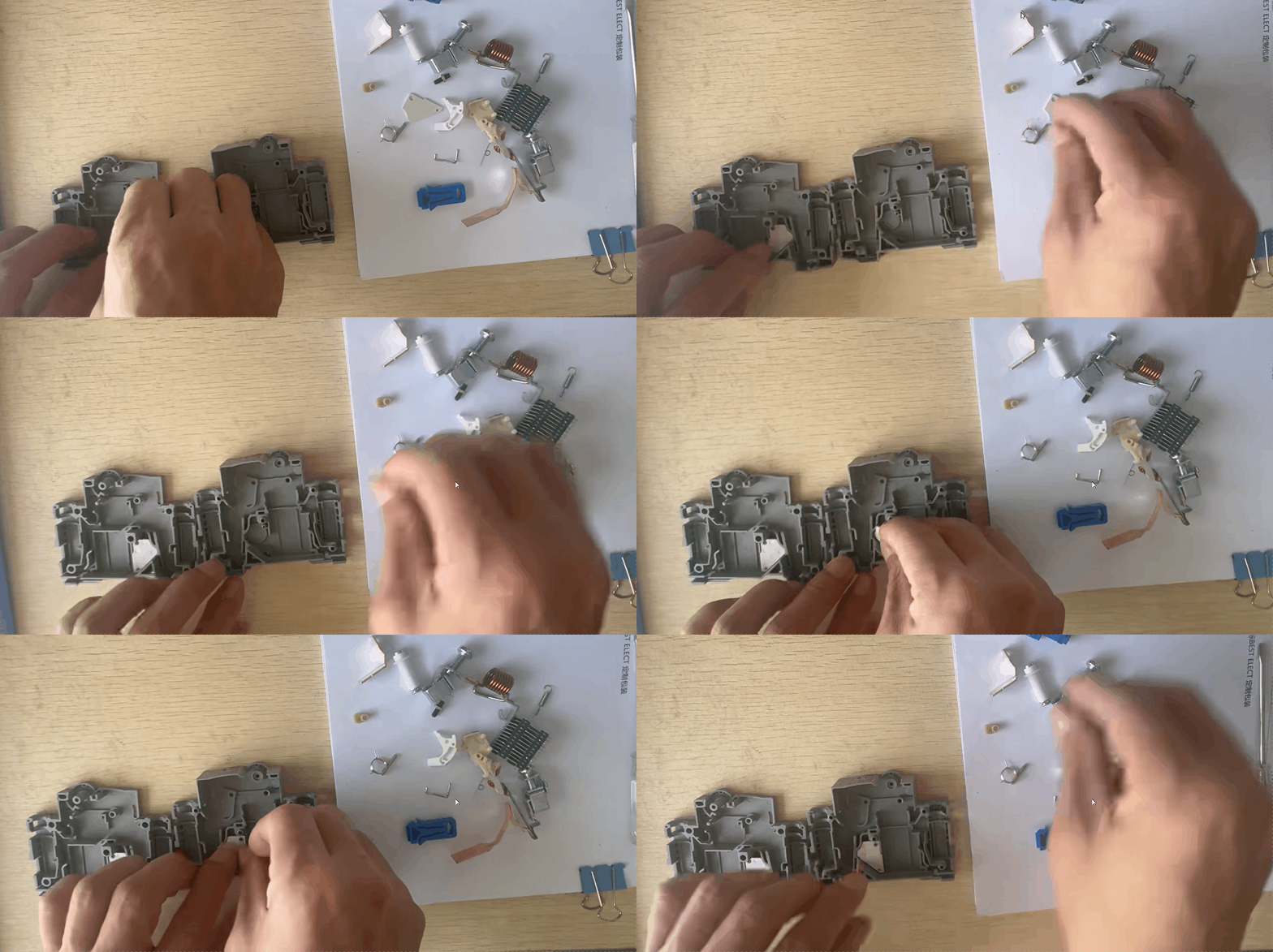
Therefore, when choosing a supplier, it is worth asking what kind of assembly support they can provide. For example, can they make assembly videos for the specific product, like we do, so that your workers can learn and follow the steps?
Let’s look at MCBs, one of the product lines in our range. Below is a short GIF showing part of an MCB assembly video I shot for one of our customers.
If you are willing to send your workers to China for training, you can also ask whether the supplier is willing to provide on-site guidance and training. We have not used this approach with a customer yet, but it is also possible for us. If a customer wants to learn the assembly process through hands-on training in China, we can arrange this based on the actual situation.
However, based on our experience with actual projects, video training may be a faster and more cost-effective option. Customers do not need to arrange for their workers to travel to China. Instead, they can watch the videos and learn at their own factory as many times as needed. For products with relatively fixed assembly steps, a clear assembly video can also help different workers follow the same process.
These may seem like small things, but they can be very practical for customers who are just starting local assembly. A supplier that is willing to provide assembly guidance can help customers become familiar with the product and assembly process more quickly and reduce problems during the early stages of production.
Can the Supplier Help You Source a Complete Set of Testing Equipment?
Once you start assembling products locally, there is another issue to consider: how will you test the products after assembly?
For customers who are just starting local assembly, testing equipment is often another problem they need to solve. You may know what tests your products need, but you may not know which equipment to buy, how to configure it, or how to set up a complete testing process.
You can certainly look for and purchase the equipment yourself in your local market. But if you have already started working with a manufacturer in China, you can also ask them if they can help.
A manufacturer that has been working in the industry for many years will usually have its own network of equipment suppliers and other industry contacts. They may be able to use these connections to help you find and screen suitable suppliers. This can save you the time and effort of searching for everything from scratch and may help you find a solution that fits your product and budget more quickly.
For breakers, for example, we can help customers source a complete set of testing equipment based on their production needs, including equipment for trip performance, temperature rise, and flame resistance testing.
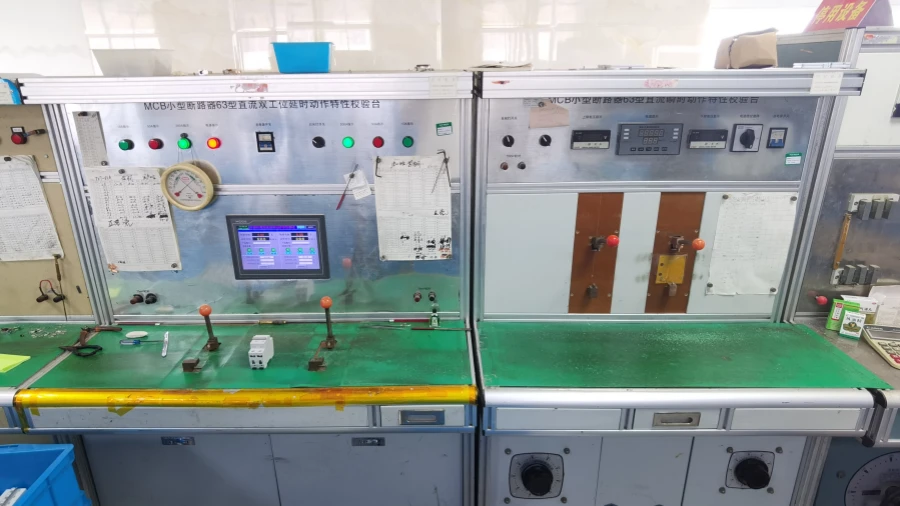
If you are just starting the project and want to keep your initial investment low, you can also tell the manufacturer about your budget. For example, you may prefer to use second-hand equipment to reduce the startup cost. In this case, the manufacturer can also use its industry network to see if there are suitable options available.
For customers starting local assembly, your supplier does not necessarily have to only provide the components. If they are willing to use their industry experience and supplier network to help you solve some of the other problems involved in setting up production, the whole project may be easier to get started.
Can the Supplier Help You Establish Quality Inspection Standards?
When you start local assembly, there is another issue that is easy to overlook: how can you maintain consistent product quality over the long term?
At the beginning of a project, many customers focus mainly on component prices, lead times, and the assembly process. Quality inspection is not always something they think about from the start. However, when you import components from China and assemble the products at your own factory, you also need to make sure that the quality of the components and finished products remains consistent over time.
Therefore, when choosing a supplier, it is worth asking whether they are willing to help you establish quality inspection standards for your products.
These standards can cover different stages of the production process. For example, you may need incoming quality inspection (IQC) standards for the components you receive, in-process inspection standards during assembly, and final inspection standards for the finished products.
A supplier can provide inspection instructions explaining what needs to be checked, how each item should be checked, and what should be considered acceptable.
More importantly, the purpose of establishing these standards is to make sure that both sides use the same inspection standards. The supplier can use them when preparing and inspecting the components in China, while the customer can use the same standards to inspect the components after receiving them at their own factory.
In this way, both sides have the same basis for deciding whether a product is acceptable or not. This can also reduce communication problems and quality disputes caused by different inspection standards.
This may sound simple, but it is not always that easy in practice. Many Chinese factories use inspection documents written in Chinese internally. If customers need to use these documents at their own factories, the supplier may need to spend additional time organizing and translating them into English.
I have experienced this with a customer before. Although the project had not officially started yet, the customer was very concerned about maintaining consistent quality over the long term and considered quality control an important part of the project.
After the customer asked me for the inspection documents, I even spent some extra time in the evening translating the relevant documents into English. Although the project had not officially started, I was happy to do it because I knew these documents could help solve a problem that was already causing him a lot of concern.
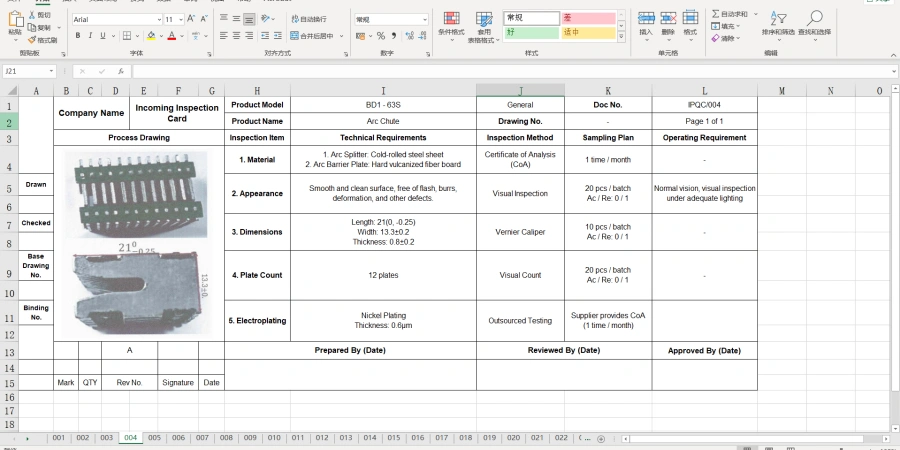
Another detail is that different product series and models should ideally have their own inspection instructions. Sometimes the basic inspection requirements are very similar between different models, but it is still better to use the inspection standards corresponding to the actual products being purchased rather than simply using one general document for everything.
For customers who are just starting local assembly, these things may not be the first things they think about. But in the long run, consistent product quality is closely connected to their own brand.
So, when choosing a local assembly supplier, besides asking, “Can you supply these components?”, you can also ask: “Can you help us establish quality inspection standards that we can use consistently at our own factory?”
I believe this is also an important question to ask when evaluating whether a supplier truly understands what a local assembly project requires.
Can the Supplier Provide Ongoing Technical Support?
The points mentioned above are some of the issues we have identified so far through our experience working with customers. However, once a project actually starts, different customers may encounter different problems depending on their products, people, equipment, and local production environment.
Some problems are difficult to predict before the project begins. For example, a component may be difficult to assemble, the assembly result may be different from what was expected, or there may be differences in testing results. Customers may also have new questions about the assembly process or quality control once production starts.
This is when ongoing technical support from the supplier becomes important.
In my opinion, local assembly should not be a project where the supplier delivers the components and the cooperation ends there. Especially for customers doing local assembly for the first time, there will always be a process of learning and solving problems. Some issues can only be discovered after actual production begins.
When problems occur, the customer may need the supplier to help analyze the cause, provide technical suggestions, or even adjust the components or assembly process. Sometimes, a few photos or a video call may be enough to solve the problem. In other cases, further communication and testing may be needed.
So, when choosing a supplier, I think it is also worth asking: “When we encounter problems during local assembly, will you continue to help us find the cause and solve them?”
For us, this is simply part of the job. We believe that a supplier’s service should not stop once the products are delivered, but should continue throughout the project. Being willing to provide timely support when customers encounter problems during actual production is also an important part of long-term cooperation.
Final Words
If you have read this far, you may have already realized something.
What you are looking for is not simply a supplier of components. What you are really looking for is a business partner you can trust — someone who can help you get your local assembly line up and running, and provide enough service and support throughout the whole process.
And in this process, the person you work with matters a lot. Is this person patient enough? Detail-oriented enough? And, most importantly, are they willing to help you work through the problems, even when they seem small or complicated? Even when you are dealing with the same supplier, different sales representatives can give you very different purchasing experiences.
After all, business is ultimately about working with people. The products, prices, and technical capabilities all matter, but having someone on the other side who is responsible, patient, and willing to work through problems with you can make a big difference in a long-term cooperation.