
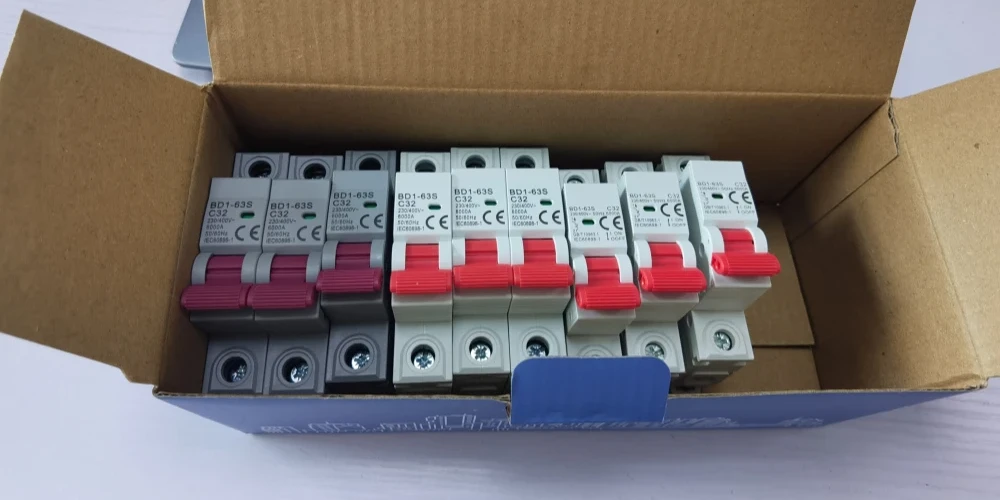
If you’re reading this, you’re probably staring at a spreadsheet full of supplier quotes and wondering where to even start. I get this question a lot from clients in my first few calls with them, so let me walk you through the process.
When you’re buying MCBs from China for the first time, it can be hard to tell which details really matter and which ones you can safely ignore. There are plenty of suppliers, product options, and quotes that look similar at first glance.
The good news is that you don’t need to figure everything out at once. A clear approach can make the whole process much easier to manage and help you make decisions with more confidence.
Define Your Product Requirements and Target Market First
Before you send a single message to a supplier, you need to know exactly what you’re buying and where it’s going. This sounds obvious, but it’s the step most first-time buyers rush through, and it causes more headaches down the line than almost anything else.
Why the destination market comes first?
Your target market decides almost everything else. MCB certification, labeling rules, and safety standards are not the same across regions, and a product that’s perfectly legal to sell in one country can be rejected at customs in another.
If you’re shipping to the EU, you’re working with IEC/EN 60898-1 or IEC 60947-2 and CE marking backed by a technical file. If you’re aiming at North America, UL 489 is the standard that matters for branch-circuit protection, and a lot of Chinese factories simply don’t hold this certification, because they are really expensive. China’s own domestic market runs on GB/T 14048.2 with a CCC mark. Here’s a quick breakdown:
| Market | Primary Standard | Certification/Mark | Notes |
|---|---|---|---|
| EU / UK | IEC/EN 60898-1 or IEC 60947-2 | CE (self-declared) | Needs a technical file behind it; new Ecodesign rules may apply soon |
| USA / Canada | UL 489 or UL 1077 | UL (NRTL-listed) / CSA | Mandatory for main panel use; many suppliers only have CE/CCC |
| China domestic | GB/T 14048.2 | CCC mark | Only relevant if you’re also selling inside China |
| ASEAN / Middle East / Australia | IEC 60898-1 or IEC 60947-2 | CE, plus local approvals like SASO or SIRIM | Widely accepted, but always check the local authority’s own rules |
One thing worth repeating clearly: if your market is the US or Canada, don’t assume CE or CCC gets you across the line. UL 489 is a completely different testing regime, and going after a supplier who doesn’t have it will waste months of your time.
Nail down your technical spec sheet
Once you know your market, put together a proper spec sheet before you request any quotes. This should cover rated current (something like 6A to 63A), breaking capacity (6kA, 10kA, and so on), number of poles (1P, 2P, 3P, 4P), trip curve (B, C, or D), and mounting type, which for MCBs is almost always DIN rail.
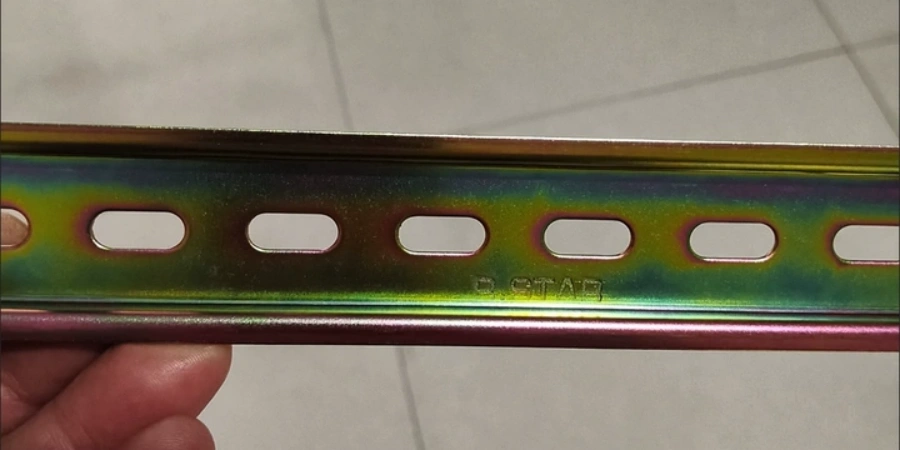
You’ll also want to think about the application itself — residential, commercial, or industrial — because this shapes which standard actually applies to you. A supplier working from a clear spec sheet will give you a far more accurate quote than one working from a vague description, and it also filters out suppliers who can’t actually meet your requirements before you waste time on samples.
Shortlist and Verify Chinese MCB Suppliers the Right Way
Once your specs and market are locked in, the next job is finding suppliers who can actually deliver what you need — not just the ones with the flashiest storefront.
Go beyond the platform badges
Alibaba, Global Sources, and Made-in-China are the usual starting points, and they’re fine for building an initial list. But these days, you have another option: AI. You can ask tools like Chatgpt, Geimini to recommend suppliers based on your product and target market, which can make the initial search much easier.
I saw this firsthand with an Algerian customer who recently visited our factory for MCB CKD. As he was leaving, I asked him how he had found us. He told me he had asked DeepSeek to recommend suppliers, and that’s how he came across our company.
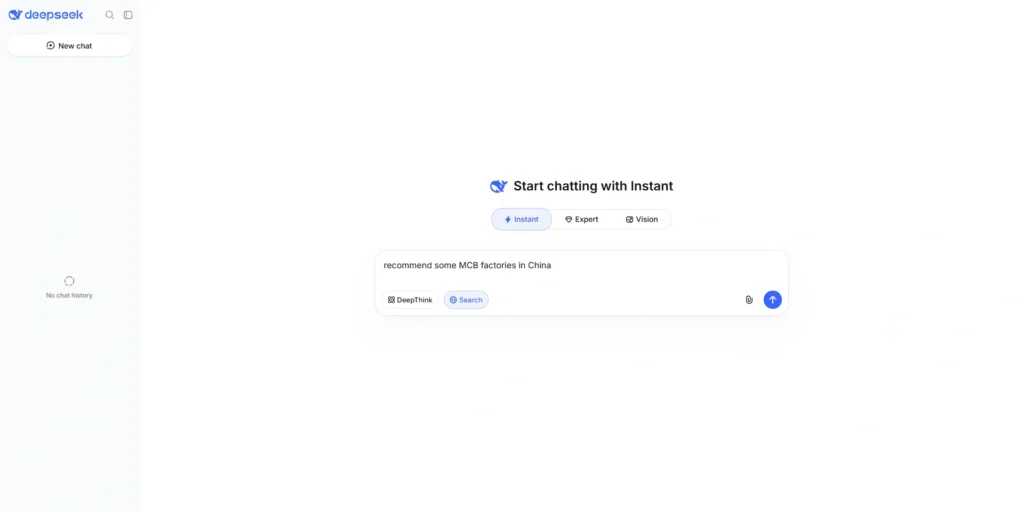
Of course, being recommended by AI doesn’t mean a supplier is automatically reliable. Whether you find a factory through Alibaba, a trade show, or an AI tool, you still need to verify what you’re dealing with. Don’t stop at “Verified Supplier” badges. Look for at least three to five years in business, and ask directly for copies of CE, CCC, ISO 9001, and — if it applies to your market — UL 489 test reports.
For larger orders, a third-party factory audit from an inspection company like SGS or Bureau Veritas is worth the cost, or at minimum ask the supplier for their most recent audit report. I’ll also say this from experience: a supplier’s willingness to hand over these documents without hesitation tells you a lot on its own. If they stall or send you a generic certificate that doesn’t match your exact model, treat that as a warning sign, not a formality to skip.
Don’t assume the biggest name is your best fit
Here’s something a lot of buyers get wrong early on. A well-known factory isn’t automatically your best option, and it might come with a higher price tag without much extra value for a first order. Plenty of smaller, less famous factories in clusters like Yueqing put their money into production quality rather than marketing, and their pricing reflects that. It’s also worth remembering that when your order volume is still small, a big factory with a full order book may not prioritize you the way you’d hope — factories have their own internal chaos to manage.
Working with someone who knows the local supply chain well, whether that’s an agent or a trading company, often saves you more in avoided mistakes than it costs in fees. This is especially valuable for first-time buyers, who may otherwise run into slow replies, unclear terms, or quality issues nobody wanted to own.
Reputable manufacturers in this space include names like Tengen, Chint, Delixi, and various Yueqing-based factories, but the name alone doesn’t guarantee fit — you still need to check each one’s export experience and after-sales support before committing.
Should You Order Samples Before Your First Bulk Order?
Short answer: yes, you should. And we suggest you do it every time. This is the step people are most tempted to skip when they’re eager to get the order moving, and it’s the one that saves the most money when things go wrong.
That said, I do have some clients who skip the sample stage when the order is small or the project is time-sensitive. In those cases, they usually accept a little more risk in exchange for getting the order moving faster. It’s a trade-off, but for a first order, I’d still recommend getting a sample whenever the timeline allows.
What to actually check in a sample
A sample isn’t just about seeing that the product exists. Check the markings match your spec exactly, verify the dimensions against your drawings, test the mechanical operation by switching it on and off repeatedly, and review the trip characteristics and breaking-capacity documentation.
Look closely at the terminals and general workmanship too — small details like screw quality or housing seams tell you a lot about the factory’s overall process discipline.
If you have access to a local lab or in-house testing capability, run the sample through trip time, dielectric strength, and temperature rise tests as well; this catches problems no visual inspection will ever find.
Lock in a golden sample before mass production
Once you’re happy with a sample, don’t just move straight to production. Approve what’s called a “golden sample” and lock down the critical materials, components, markings, and performance specs against it in writing.
This becomes your reference point for every batch after that, and it protects you from unapproved changes creeping in between orders — something that happens more often than buyers expect, usually not out of bad intent but because factories substitute materials when supply runs tight.
For a first import, I’d also suggest sticking with a proven standard MCB model rather than jumping straight into a heavily customized OEM design. Save the customization for once you’ve validated demand and confirmed the supplier is consistent — chasing a custom build on your very first order adds risk you don’t need yet.
What Documents to Check Before You Pay an MCB Supplier?
This is where a lot of first-time buyers get nervous, and rightly so — this is the point where real money changes hands.
Certificates need to match your exact product
A CE logo on a supplier’s website or a generic certificate PDF proves very little about the actual quality of the product. CE is about showing that the product meets the applicable EU requirements, but it doesn’t guarantee the product’s overall quality, reliability, or long-term performance
At the same time, don’t expect a small MCB factory to have a separate certificate for every SKU — that’s simply not practical or cost-effective. Many factories use the same internal platform across several series, with only the housing, appearance, or current rating changing. In practice, testing is often done on representative models to cover key characteristics such as trip curves, breaking capacity, and current ratings.
Ask the supplier which models and ratings are covered by each certificate, and check that your product falls within the tested range. If several models share the same internal design, the supplier should be able to explain how they are covered by the same report. If you’re targeting multiple countries down the line, look for a supplier whose product line is backed by an IECEE CB Test Certificate — this can reduce duplicated testing work when applying for additional national approvals later.
Confirm terms before wiring anything
Before payment, get clear terms in writing on inspection criteria, packaging, labeling, Incoterms, delivery schedule, and shipping documents. For a first-time order, FOB is generally the easier Incoterm to manage since it limits your exposure while still keeping shipping arrangements in your control.
Avoid paying 100% upfront — a 30% deposit with the balance due after passing pre-shipment inspection is standard practice, and it gives you leverage if something isn’t right before the goods leave the factory. Always verify bank details directly and independently rather than trusting whatever appears in an email, since payment fraud through intercepted invoices is a real risk in this industry.
Arranging Quality Control and Inspections During Production
If you’re placing large annual orders and looking to build a long-term relationship with a Chinese MCB manufacturer, a structured quality-control process is worth considering; for small orders, a full inspection process is usually unnecessary.
Once your golden sample is approved and the deposit is paid, the real work of quality control begins. This is the stage where problems either get caught early and cheaply, or they get shipped to your warehouse and become your problem to fix.
Break inspections into three stages
Don’t wait until the container is packed to check quality. Run a pre-production check to confirm the raw materials and tooling actually match what was agreed for your golden sample. Then, during production, do a DUPRO check (during-production inspection) partway through the run — this catches issues while there’s still time to fix them without scrapping the whole batch.
Finally, before the goods ship, run a pre-shipment inspection using AQL sampling to verify quantity, labeling, and function against your spec. Here’s how the three stages break down:
| Stage | Timing | What It Catches |
|---|---|---|
| Pre-production check | Before manufacturing starts | Wrong materials, incorrect tooling setup |
| DUPRO (during production) | Partway through the run | Process drift, early defects, batch inconsistency |
| Pre-shipment inspection (PSI) | Before goods leave the factory | Quantity errors, labeling mistakes, functional failures |
Skipping straight to the last stage is a common mistake I see with first-time buyers. By the time a PSI catches a problem, you’re often looking at a full batch that needs rework, and that eats into your delivery timeline fast.
Test what you can’t see with your eyes
Visual inspection only tells you so much about an electrical product. If you have in-house testing capability or access to a local lab, test sample units from the batch for trip time, dielectric strength, and temperature rise.
These are the kinds of failures that won’t show up in a visual check but will absolutely show up once the product is installed and under load. I always tell clients: a breaker that looks perfect but trips five seconds late isn’t a cosmetic issue, it’s a safety issue, and it’s the kind of thing that only shows up under proper testing.
Handling Logistics and Customs Clearance
Getting the product built correctly is only half the job. Getting it out of China and through your own country’s customs without delays is the other half, and it trips up a surprising number of first-time importers.
Work with a forwarder who knows electrical products
Not every freight forwarder is equally comfortable with electrical goods, so look for one with specific experience in this category. A good forwarder handles booking, documentation, and customs brokerage, and can flag issues with your paperwork before they become a hold-up at the border.
Make sure you have the full document set ready ahead of time: commercial invoice, packing list, bill of lading or air waybill, certificate of origin, and any required test reports or certificates. Missing even one of these can stall a shipment at the port for days, and demurrage fees add up fast while you’re waiting on paperwork to get sorted out.
Know your duty rates and compliance filings ahead of time
MCBs typically fall under HS code 8536.20, and the duty rate depends heavily on your destination. In the US, you’re usually looking at roughly 2.5-4%, plus the possibility of Section 301 tariffs depending on current trade policy. In the EU, duty runs around 2-3.7% plus VAT on top.
These numbers shift, so always confirm the current rate with your customs broker rather than relying on last year’s figures. Beyond duties, make sure your compliance paperwork is in order too — in the US, this means confirming your products meet UL/NRTL requirements if that’s your certification path, and in the EU, you need to keep your technical file and Declaration of Conformity on hand in case of a market surveillance check.
Payment and Risk Mitigation
Money is usually where first-time importers feel the most exposed, and for good reason — once a wire transfer goes out, getting it back is hard. A little structure here goes a long way.
Structure payments to protect yourself
Stick to secure payment methods like Telegraphic Transfer (T/T) split across milestones, or use a platform like Alibaba Trade Assurance for escrow-style protection on your first few orders.
A typical structure is 30% deposit to start production, with the remaining 70% due after your pre-shipment inspection passes and before the cargo actually leaves. This gives you real leverage — if something’s wrong with the batch, you haven’t paid for it yet, and the supplier has every incentive to fix it before shipment rather than after.
In practice, though, smaller orders are often handled differently. Many Chinese manufacturers require 100% payment upfront, since splitting a small order into two payments means extra work and potentially two rounds of bank transfer fees for the buyer. For smaller orders, paying in full upfront is often simpler for both sides, as long as you’ve verified the supplier and confirmed the order details.
Watch for invoice fraud
Always verify bank account details directly with your supplier through a separate, trusted communication channel, not just whatever appears in an email chain.
Invoice fraud, where a scammer intercepts email communication and swaps in fraudulent bank details, is unfortunately common in international trade, and it’s one of those things that’s completely avoidable with a five-minute phone call to confirm details before you wire anything.
Final Thoughts
Buying MCBs from China is not just about finding the lowest quote. It means knowing what you need, choosing the right supplier, checking the product and paperwork, and keeping the process under control from production to delivery.
There’s much more to this industry, and I’ll be sharing more practical insights and real-world experience in future blogs.