
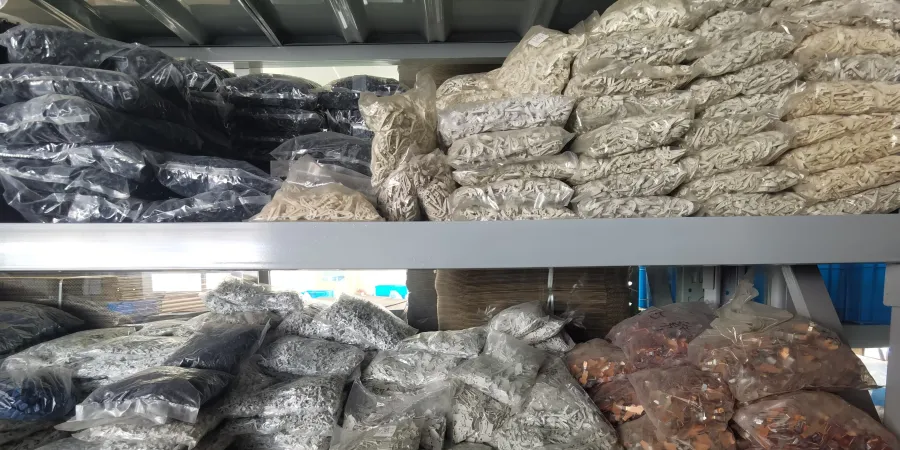
Over the past few years, we have received quite a few inquiries from buyers looking for SKD or CKD solutions instead of finished breakers. These inquiries have come from different markets, including Algeria, Thailand, South Korea, India and so on.
At first, these inquiries seemed like individual requests from different countries. But as more and more buyers started asking about parts, I began to see that there was something more behind them.
It made me wonder: What is driving these buyers to take this approach? Why are they choosing local assembly instead of simply importing finished products?
Why Is the Market Shifting to Local Assembly?
The change starts with economics and policy, but it ends with capability. Countries that once relied entirely on imports are now pushing—sometimes even requiring—companies to build at least part of the value chain locally.
In the automotive industry, this model has been around for decades. Car manufacturers have been shipping CKD kits to markets like India, Brazil, and Southeast Asia since the 1970s to avoid import duties and meet local content requirements. What’s newer is that the same logic is now spreading into electrical components, lighting, appliances, and industrial equipment.
Let me give you a real example. A customer in Thailand reached out to us last year looking for MCB and MCCB component kits. He had been buying finished products under his own brand for years. It was simple and straightforward, with Chinese factories handling most of the heavy work for him. But he told me that the rules had changed.
The Thai government had tightened its requirements, and simply importing finished products from overseas and selling them under a local brand was no longer a workable option for him. Under the new policy environment, he had to look for a new way to do business. (Related News: Thailand – Standards for Trade)
That conversation was interesting because it wasn’t about cost. It was about market access.
And it’s not just Thailand. Similar policy shifts are visible elsewhere, though the mechanisms differ.
In Algeria, electronics and appliance manufacturers can access tariff and VAT exemptions on imported components only if they meet local content thresholds—starting at 30-60% and rising to 60-80% within 24 months. (Source: Algeria’s push to rebuild local electronics manufacturing)
In Egypt, Law No. 5 of 2015 requires government contracts and tenders to prioritize Egyptian-made products, a framework the government has been actively reactivating and refining. (Source: Egypt’s product preference committee)
In Kenya, the “Buy Kenya, Build Kenya” policy reserves at least 40% of public procurement budgets for locally produced goods, and a proposed Local Content Bill (2025) would go further, requiring foreign firms to source at least 60% of goods and services locally. (Source: Kenya’s proposed Local Content Bill)
Brazil has already introduced local content requirements in its electricity sector. In the country‘s first battery storage auctions, projects qualifying for the December 2 auction must demonstrate at least 15% local content through BNDES’ accreditation system, while the December 4 auction carries no such requirement. (Source: Brazil‘s local content requirement for battery storage auctions)
The specifics vary by country, but the direction is consistent: governments want local jobs, local tax revenue, and some degree of technology transfer. Finished-product imports don’t provide the same level of local economic value.
The policy background
Import duties are one of the reasons why more companies are looking at components instead of importing finished products. In many markets, local assembly and imported components can receive more favorable tariff treatment than fully assembled products. This can make local assembly a more practical option.
Local content requirements are another important factor. Some countries are encouraging companies to carry out part of their production locally, especially when it comes to government projects, infrastructure, and other large-scale procurement. Once a company starts assembling products locally, it may have access to opportunities that are not available to companies that only import finished products.
But the benefits are not only about tariffs or market access. Parts supply also give companies a way to build local production capabilities step by step. Instead of investing in a complete production line from the beginning, they can start with assembly, then gradually develop their testing, quality control, and production processes.
This is one reason why parts supply can be attractive to companies that want to move from simply importing and selling products toward local manufacturing. SKD is usually easier to start with because more of the product is already assembled by original factories. CKD requires more local work, but it also gives the company more control over the assembly process and more room to build local production capability.
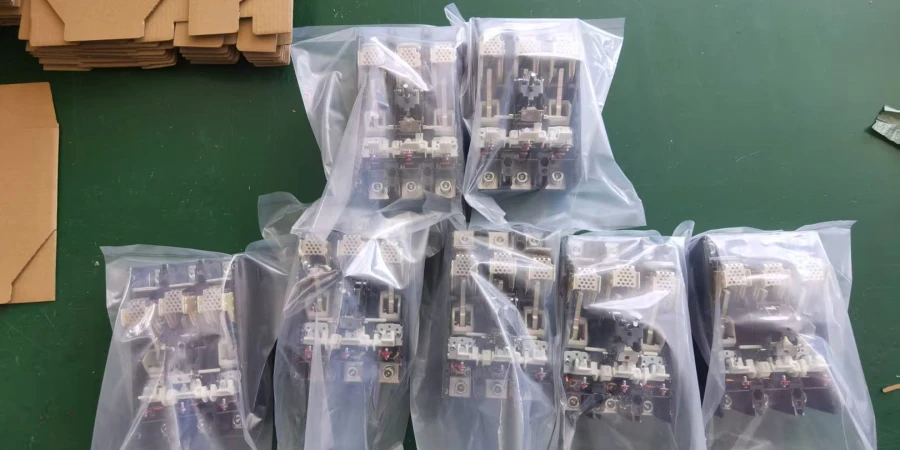
Why Are Companies Moving to Parts?
Tariffs and trade policies are one factor driving companies to consider SKD and CKD, but they are not the only ones. From a practical business perspective, many companies are also looking for greater flexibility in shipping, inventory, order response, and local product adaptation.
Shipping Efficiency
Finished products can take up more space during transportation, while SKD and CKD allow products to be shipped in a more compact form. This can improve container utilization and reduce transportation costs per unit.
This can be especially important when transportation distances are long or logistics costs are high.
For companies with large order volumes or frequent shipments, the transportation method itself can also become an important factor when choosing a supply model.
Inventory Pressure
Importing finished products usually means deciding product models and quantities in advance. If actual market demand is different from expectations, companies may end up with too much stock of some specifications while not having enough of others.
SKD and CKD offer another way to manage inventory. Some components can be prepared in advance, while the final products can be assembled based on actual orders. This means companies do not have to keep all products in their final form from the beginning.
Order Response and Product Mix
Different customers and projects may require different product specifications. For companies importing finished products directly, the room for adjustment can be limited if suppliers mainly provide fixed product configurations.
With parts supply, companies can complete part of the assembly or configuration locally and adjust the final product according to actual orders. This flexibility can be especially useful in markets where product specifications vary across customers and projects.
Local Market Adaptation
Different markets may also have different requirements for labeling, accessories, packaging, testing, or certification.
If all products are imported as finished products, preparing different versions for different markets can make product management more complicated. With Parts Supply, companies can keep a relatively common product base while completing some of the final configuration according to local market needs.
Overall, companies are considering parts supply for more than just tariffs or trade policies. For many businesses, the main benefit is the greater flexibility in inventory management, order response, and local product adaptation that comes from changing the way products are supplied.
Is SKD/CKD Becoming a Long-Term Manufacturing Model?
I don’t think SKD and CKD are just a short-term trend.
From what we see in the market, more companies are looking at local assembly, and the reasons go beyond temporary changes in tariffs or rising shipping costs. A deeper change is taking place in some emerging markets: companies are gradually moving from importing finished products toward local assembly, local sourcing, and greater localization.
From Finished-Product Imports to Local Manufacturing
For countries that are developing their industrial capabilities, local manufacturing has long been an important goal.
When a company first enters a market, importing finished products is often the simplest option. There is no need to build a production line or make major investments in equipment and production staff.
But as the market develops, companies may start to face new questions.
If they continue to rely on imported finished products, they may face limitations in cost, delivery, supply stability, or local market requirements. At the same time, some markets are gradually increasing their requirements for local production and localization.
In this situation, companies do not necessarily need to move directly from “importing finished products” to “full local manufacturing.”
SKD and CKD can provide a middle path.
Companies can start with local assembly and then gradually develop local sourcing, testing, quality control, and engineering capabilities as their production capabilities grow.
In this sense, SKD/CKD is not simply a different way to export a product. It can provide a practical transition from importing finished products toward local manufacturing.
Localization Is a Gradual Process—and Global Supply Chains Can Coexist
Localization usually does not happen all at once. In practice, companies can decide which processes to complete locally and which components to continue sourcing from overseas based on their own capabilities. As their production experience grows, they can gradually increase local sourcing, assembly, testing, and quality control.
This means companies do not have to take on all the investment and management pressure of full local manufacturing from the beginning. For companies building local manufacturing capabilities, starting with SKD and gradually increasing the level of local sourcing and production can be easier to implement than building a complete production system all at once.
At the same time, localization does not mean that everything has to be manufactured locally. For many electrical products, some core components can still be supplied through established global supply chains, while part of the assembly, testing, quality control, and final configuration is completed locally.
So the future does not necessarily have to be a choice between “import everything” and “manufacture everything locally.” A more practical model may combine both: core components are supplied through established global supply chains, while part of the assembly, testing, quality control, and final configuration is completed locally.
This model allows companies to take advantage of mature manufacturing supply chains while gradually building their own local production capabilities. From this perspective, SKD and CKD can become a long-term way to connect global supply chains with local production, rather than simply a solution for short-term cost or trade changes.
Final Thoughts
The push toward local industrialization is not a passing trend. For many countries, it is a long-term direction that will shape how markets develop over the next decade.
We may not be able to change the direction of a country’s industrial development. But we can choose how we participate in it.
As markets move toward greater localization, there are also new opportunities for suppliers and customers to work together, build capabilities, and grow together.
Sometimes, the best way to respond to change is not to resist it, but to become part of it.