
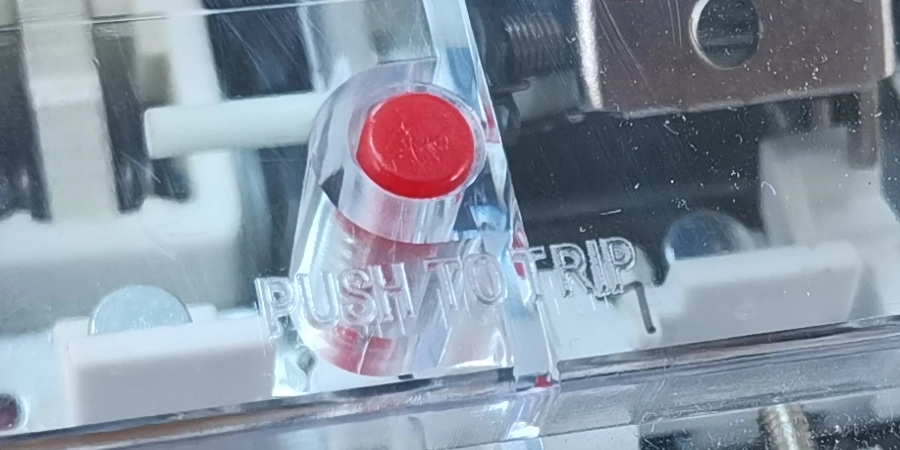
When customers buy circuit breakers, they deal with specific models, parameters, and prices. Beyond confirming whether the protection functions meet requirements, they also need to check whether the product’s structure and operating design can stand up to comparison.
The Push-to-Trip button deserves particular attention. It sits prominently on the panel right next to the operating handle, so it is hard to miss—yet buyers often still overlook what it actually does.
For buyers, understanding what this small button does and the design logic behind it helps them assess a product more thoroughly during selection and inspection, and also allows them to ask more specific questions when communicating with manufacturers.
What Does the Push-to-Trip Button Do?
A circuit breaker usually trips automatically when it detects a fault such as an overload or short circuit, protecting the circuit and equipment. But in practice, we sometimes need to trip the breaker on purpose, for example during equipment maintenance or when checking whether the breaker works properly.
In these cases, if the circuit itself has no fault, how can the breaker be tripped?
The Push-to-Trip button is designed for this. It lets us press the button by hand to directly trigger the breaker’s trip mechanism, so the breaker trips and cuts off the circuit. This way, the breaker can complete a trip action even when there is no actual electrical fault.
The working principle is not complex. It is usually a plastic button or operating part with a spring that, when pressed, acts directly on the breaker’s internal trip latch, releasing the trip mechanism and finally opening the contacts. The whole process is mechanical and does not need electronic control or electromagnetic triggering.
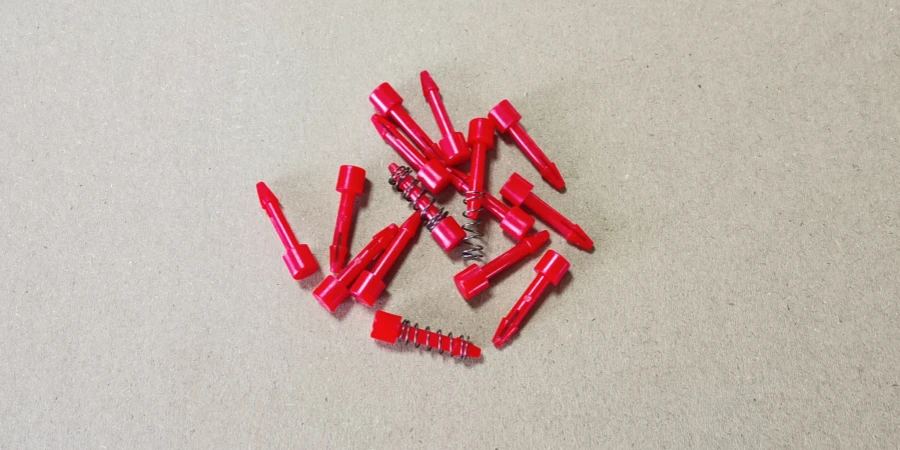
There is one point to know here: the Push-to-Trip button is a bit different from the Test button on an RCD or GFCI. Both can trip the device when pressed, but the Push-to-Trip button directly triggers the breaker’s mechanical trip mechanism, rather than simulating an electrical fault to test the protection function.
Which Circuit Breakers Have a Push-to-Trip Button?
Not all circuit breakers have a Push-to-Trip button. Standard household MCBs usually do not have this button as a separate feature. This relates to the product positioning of MCBs: they are designed for small size and low cost, and for routine checks of whether the mechanical operation is smooth, simply moving the operating handle by hand is enough for a basic check. So there is little need to add an extra test mechanism.
In contrast, MCCBs, ACBs, some VCBs, and other types of breakers may all use a similar manual trip design. Although the buttons and internal linkage structures are different between products, the basic purpose is the same: to manually trigger the internal mechanical trip mechanism so the breaker trips.
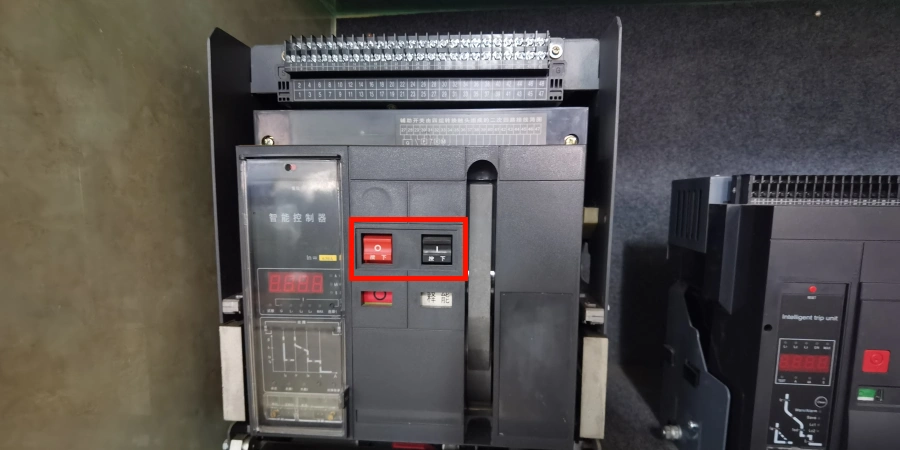
Designs also vary between brands and product series. Buttons may be round, oval, or square, and colors differ as well, mainly depending on the manufacturer’s product design.
Also, on MCCBs, not all products clearly label it “Push-to-Trip.” Some mark it on the cover, others only mark the button with “Test,” and some may not label it at all.
How to Use the Push-to-Trip Button to Test a Breaker’s Trip Mechanism?
First, make sure the breaker is in the ON position, then find the button marked “Test” or “Push-to-Trip” on the front of the breaker and press it. Under normal conditions, the breaker should trip immediately: the operating handle moves to the trip position (usually between ON and OFF), the internal contacts open, and the circuit is de-energized.
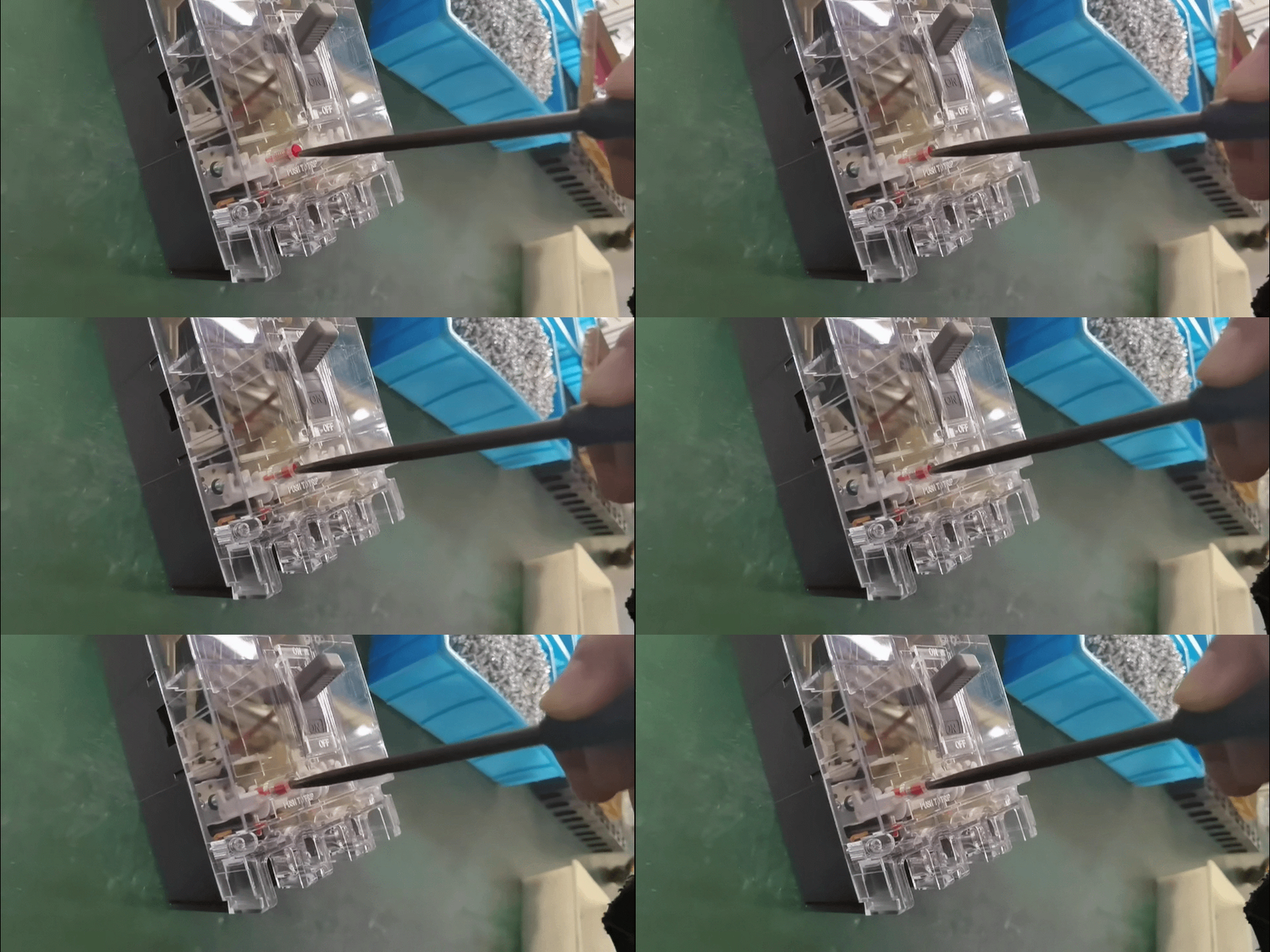
After the test, we need to reset it. This usually means moving the handle to OFF first, then back to ON. If the breaker is supplying power to servers, production equipment, or refrigeration equipment, you also need to consider the impact of a sudden power cut before testing. It is best to schedule the test during maintenance windows or when the equipment is not running.
If the breaker does not trip after pressing the button, or the handle behaves abnormally, this may point to sticking or other problems in the internal mechanical mechanism. This test helps us catch these problems early.
The Limits of This Test
For buyers, the Push-to-Trip test is a simple way to quickly check a breaker’s mechanical trip function. During procurement, it can give a first indication of whether the mechanical mechanism operates correctly.
However, this test cannot verify whether the thermal and magnetic trip protection works properly. Pressing the button only triggers the mechanical mechanism directly; it does not actually test the overload and short-circuit protection system. So even if the test passes, you cannot conclude that the thermal trip bimetal, the magnetic trip coil, or the trip settings are normal.
A full assessment of a breaker’s protection performance requires professional electrical testing.
Why the Push-to-Trip Button Matters in Real-World Use
When a circuit overload or short circuit occurs, we need the breaker to cut off the circuit in time. This requires not only that the protection elements work properly, but also that the internal mechanical trip mechanism operates when needed.
In daily use, however, a breaker may stay in the closed position for long periods, and few people actively check whether its mechanical mechanism is still working smoothly. Long periods without operation, combined with dust, moisture, corrosion, and other environmental factors, can cause internal mechanical parts to stick or behave abnormally.
So we can’t assume a breaker is always in good working condition just because it looks intact and the equipment is running normally.
Regular testing with the Push-to-Trip button helps maintenance staff check whether the breaker’s mechanical trip mechanism operates correctly and catch potential problems early. This check can therefore be included in the equipment’s routine maintenance plan to confirm on a regular basis that the breaker’s mechanical mechanism is in normal condition.
For industrial equipment and power distribution systems, breakers often carry important circuit protection duties. If a breaker fails to trip when a real fault occurs, it can lead to equipment damage and even more serious safety risks.
Through regular checks, we can find mechanical operation problems earlier and arrange further inspection or replacement in time, reducing potential risks during equipment operation.
Final Thoughts
For buyers, learning about the Push-to-Trip button is mainly about understanding a breaker’s structure and functional design. Although it is just a small, easily overlooked part, it reflects some details of the breaker’s mechanical structure and maintenance design.
Understanding these details helps us build a fuller picture of the product when we encounter breakers of different types and brands.