
When a short circuit occurs, we usually want the circuit breaker to cut off the circuit as quickly as possible. After all, the longer the short-circuit current lasts, the greater the thermal and electrodynamic stress on cables, equipment, and other electrical components.
But some circuit breakers do not trip immediately after a short circuit occurs. Instead, they allow the short-circuit current to flow for a short period of time. Why engineers design it this way? Since short-circuit current is dangerous, why let the breaker delay its action?
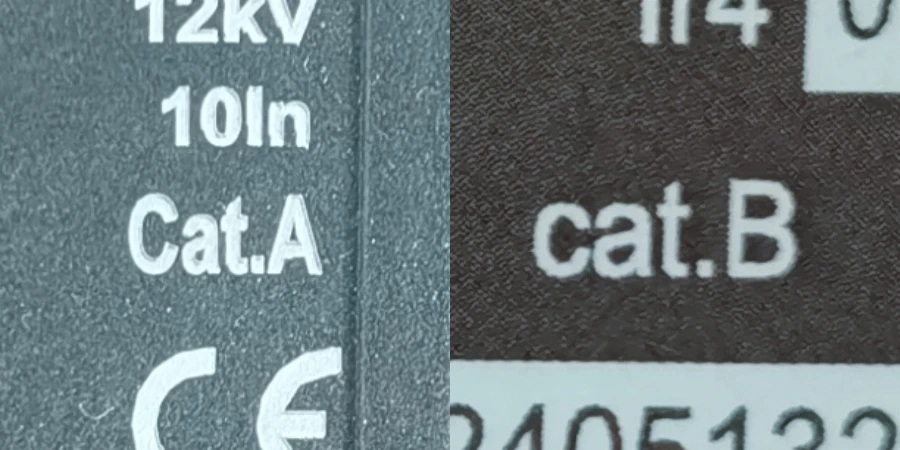
This comes down to two circuit breaker categories in the IEC 60947-2 standard: utilization category A and category B. You can often see them marked on the nameplate of a circuit breaker. But do you know why circuit breakers are divided into these two categories? What is the reason behind this classification?
What Do Category A and Category B Circuit Breakers Actually Mean?
The main difference between Category A and Category B circuit breakers comes down to how they respond after a short circuit occurs.
Category A breakers take a straightforward approach: once a short circuit is detected, they cut off the circuit as quickly as possible, like a reflex action. They do not deliberately wait before tripping. For these breakers, minimizing the duration of the fault is an important design consideration, and this is the most common type of circuit breaker.
Category B breakers have an extra option: they can hold off on tripping for a while, like a hunter waiting for the right moment. After a short circuit occurs, they can delay for a set period before deciding whether to cut off the circuit. Of course, this does not mean they can withstand short-circuit current indefinitely.
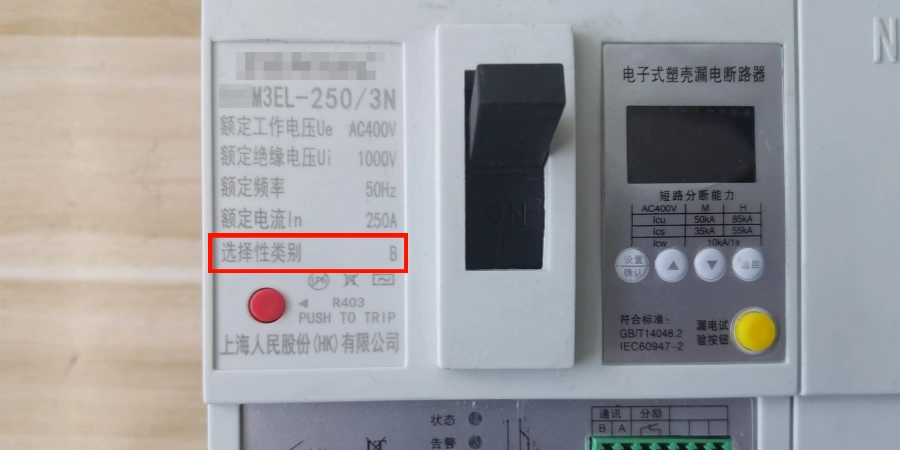
To stay safe during the delay, Category B breakers must be able to withstand a certain level of short-circuit current for a specified time. This capability is expressed as the rated short-time withstand current (Icw).
So, simply put, the difference between Category A and Category B is this: Category A focuses on cutting off short-circuit current as quickly as possible, while Category B has short-time delay capability and can temporarily withstand short-circuit current under certain conditions.
Why Engineers Design It This Way?
As we asked at the beginning, why are circuit breakers classified this way? It actually has to do with how power distribution systems work.
In a real distribution system, power is usually not sent from a single circuit breaker directly to all equipment. Instead, it goes through multiple levels of distribution before being supplied to different equipment and circuits. In other words, a system often has multiple circuit breakers, and there is a protection relationship between upstream and downstream breakers.
Here’s a simple example: a main breaker handles the incoming supply for an entire distribution panel, with several branch breakers connected below it. Each branch breaker then protects a different piece of equipment or circuit.
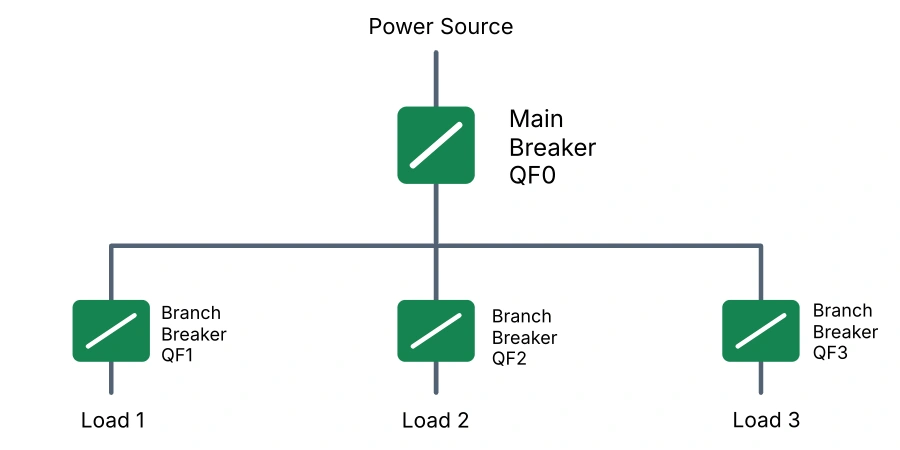
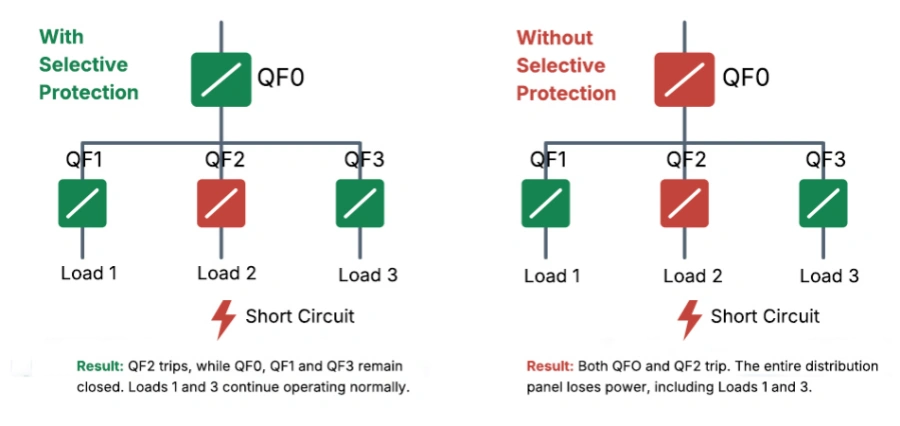
If a short circuit occurs on one of the branches, ideally we would want only the breaker for that branch to trip, while the main breaker and the other branch breakers stay closed. That way, the fault only affects the circuit with the problem, and the other equipment can keep running normally.
The problem is that the short-circuit current may be detected by both the upstream and downstream breakers at the same time. If they all act quickly based on their own protection settings, unnecessary tripping at a higher level can occur: instead of cutting off just one branch, the main breaker trips too, cutting power to the entire distribution panel or an even larger area.
This is why engineers developed Category B circuit breakers.
Category B breakers can use a short-time delay setting to make the upstream breaker wait for a moment, giving the downstream breaker closer to the fault time to act. If the downstream breaker clears the fault successfully, the upstream breaker does not need to trip, and the other normal circuits can keep running.
This is the basic idea behind selective protection. The diagram below compares the two scenarios.
Of course, this waiting comes at a cost. During the delay, the short-circuit current is still flowing, and the breaker and the conductors connected to it must withstand the corresponding thermal and electrodynamic stress. That’s why Category B breakers need enough short-time withstand capability to safely carry the short-circuit current for the specified time.
Category A breakers take a different design approach. They focus more on clearing the fault quickly. In many final circuits, this approach already meets protection needs well, and there is no need to add short-circuit delay capability.
So the classification of Category A and Category B breakers essentially comes from different protection needs in a distribution system: some locations need fast fault clearing, while others need to allow time for protection coordination between upstream and downstream breakers while staying safe.
Neither design is more advanced than the other. They are meant to let circuit breakers play the right role at different points in the distribution system.
Where Are Category A and Category B Circuit Breakers Used Together?
In practice, whether Category A and Category B circuit breakers need to work together depends mainly on the size and structure of the distribution system, and on how much supply continuity is required.
Some common application applications can help understand this.
Where Selective Protection Matters
Large industrial plants—such as car factories, semiconductor fabs, and steel mills—usually have multiple production lines and a large amount of production equipment, and their distribution systems are fairly complex, often including several levels such as main distribution panels, sub-distribution panels, and equipment control panels.
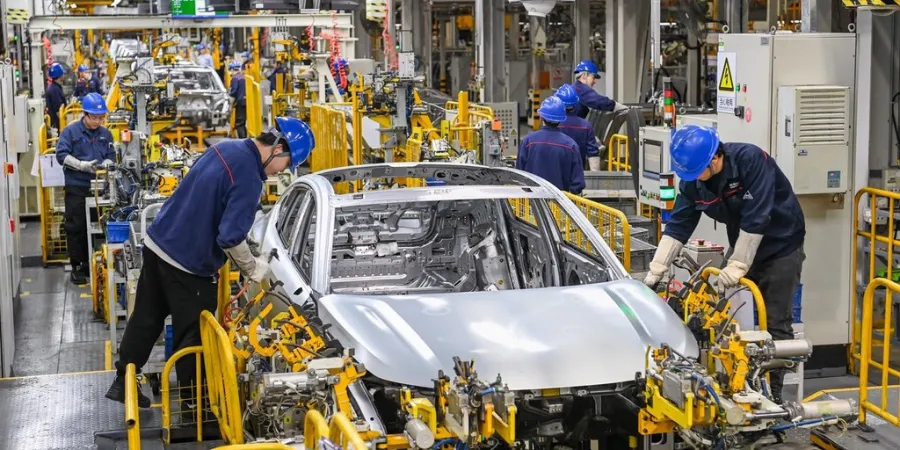
If a short circuit occurs on a production line or a piece of equipment, we want to cut off only the faulted circuit rather than tripping the upstream main breaker and disrupting other production lines. For this reason, these sites need to consider selective protection between breakers.
Data centers are another typical example. Server rooms, UPS systems, and network equipment areas usually have a large number of independent supply circuits, and much of the equipment needs to run continuously. If a fault occurs in a cabinet or on a branch circuit, we want to keep the fault localized and avoid affecting other servers and equipment.
Airports, hospitals, large shopping malls, and high-rise buildings may also have similar needs. These places often have many distribution circuits, and some areas or critical equipment have high requirements for supply continuity. Proper coordination of upstream and downstream breakers can keep outages as limited as possible when a fault occurs, reducing the impact on other areas and equipment.
Where Category B Breakers Are Usually Not Needed
In ordinary homes, lighting, socket, and air-conditioning circuits are usually protected separately by breakers in the distribution box. For a distribution system of this size with a relatively simple structure, Category A breakers that clear faults quickly are usually enough to meet protection needs.
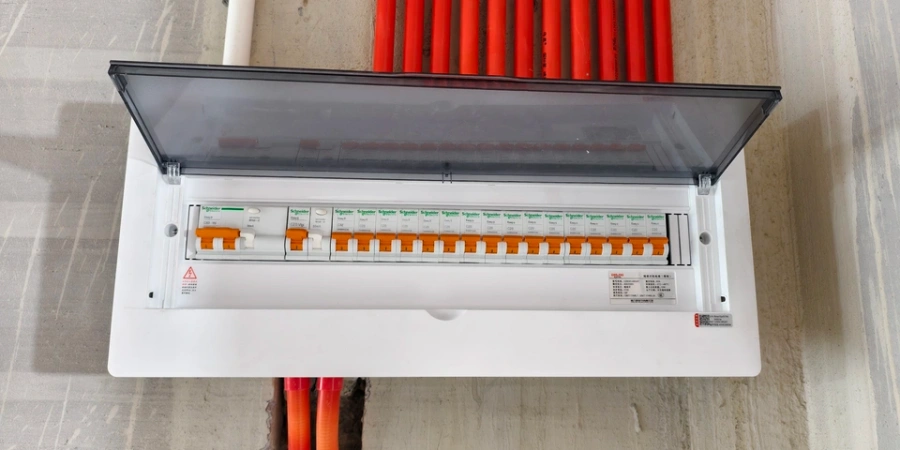
Small shops, ordinary offices, and convenience stores often use a similar distribution approach. If the distribution system has few levels, a fault affects only a limited area, and there are no particularly strict upstream/downstream time-selective requirements, then there is usually no need to use Category B breakers with short-time delay capability.
This does not mean these sites have no need for selective protection at all—it just means they usually do not need to rely on the short-time delay function of Category B breakers to achieve it. We won’t go into detail on that here.
Focus on What the Distribution System Actually Needs
It’s good to know that you cannot simply assume large sites always need Category B breakers and ordinary buildings only need Category A. Even in an ordinary building, if there are multiple distribution levels or critical loads, selective protection between upstream and downstream breakers may still need to be considered. And in a large factory, some final circuits may only need Category A breakers.
Ultimately, the choice of breaker category depends on where it sits in the distribution system and on the system’s specific requirements for fault clearing speed and selective protection.
Conclusion
Understanding the difference between Category A and Category B circuit breakers helps us judge more clearly what kind of protection is needed for different distribution systems.
When selecting a circuit breaker, beyond basic parameters such as rated current and breaking capacity, don’t overlook the breaker’s category and the corresponding standard requirements. Only by taking actual application conditions into account can you make a more reasonable choice.