
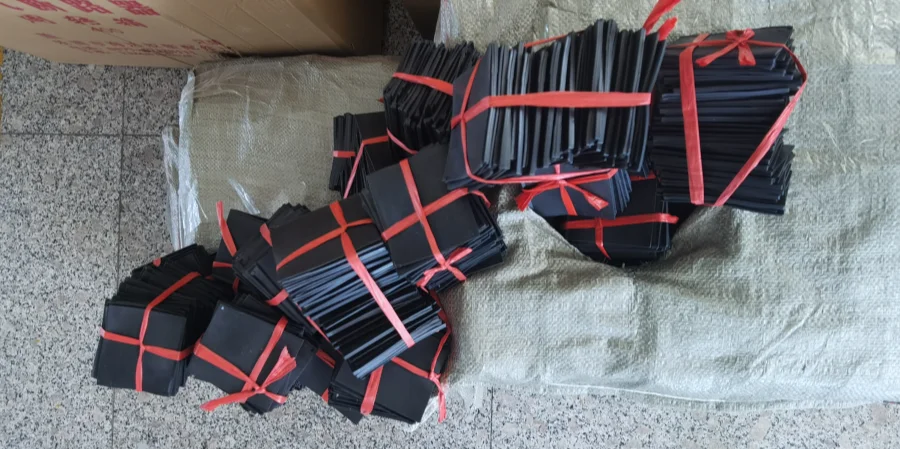
Have you ever noticed those small insulating plates between the terminals of some electrical components inside a distribution box? They are called interphase barriers. They may not look like much, but they are a part that some electrical components use.
When we choose an electrical component, we usually look first at key specs such as rated voltage, rated current. But the design and the parts it comes with are also worth knowing about. The interphase barrier is one of them, and it deserves a closer look.
So let’s start with the interphase barrier itself, and see what makes this small part worth paying attention to in both design and real-world use.
Why Can Interphase Barriers Improve the Safety?
The main job of an interphase barrier is to lower the risk of a phase-to-phase electrical fault at the power terminals.
Let’s take circuit breakers as examples. When a circuit breaker is installed inside a distribution cabinet or switchgear enclosure, the line side and load side — that is, where the incoming and outgoing conductors connect — are often the spots where insulation is most likely to be affected.
Conductors of different phases sit close together, the connecting parts take up space, and things like dust, moisture, or physical damage can all affect the air gap between phases.
How do phase-to-phase faults happen?
Phase-to-phase faults don’t only come from serious system failures. The following common situations can also slowly raise the risk:
- Insufficient clearance: In tight installations, conductors or busbars may sit too close together, making the actual clearance smaller than what safety requires.
- Conductive contaminants: Dust, metal particles, carbon deposits from arcing, or moisture can create an unwanted conductive path between phases.
- Vibration and thermal expansion: Over time, mechanical vibration or temperature cycling can cause conductors to shift slightly, which reduces clearance or wears down insulation.
- Installation errors: Wrong tightening torque on terminal screws, misaligned terminals, or conductors installed in the wrong position can all cause local overheating or reduce insulation margins.
When a fault happens between two phases, it often produces a high-energy arc, which can damage equipment, cause fire, or injure people.
Arc flash accidents are especially dangerous, because they can release a huge amount of heat and create enormous pressure in a very short time.
How Do Interphase Barriers Provide Protection?
Interphase barriers help lower these risks by forming a solid insulating wall between the terminals of nearby phases. Their main jobs include:
- Keeping a steady clearance: Even when installation tolerances vary, or conductors shift a little over time, the barrier helps keep the needed insulation distance.
- Blocking conductive contaminants: Even in dusty or industrial places, the barrier helps stop dust, metal bits, or carbon deposits from forming a conductive path between phases.
- Limiting arc fault spread: If an arc fault occurs in one phase, the barrier helps reduce the risk of it spreading to nearby phases. This lowers the chance of the fault getting bigger and cuts down the overall energy released.
- Improving operator safety: By covering live terminals and lowering the risk of accidental contact between phases during maintenance, interphase barriers give workers in distribution cabinets an extra layer of protection.
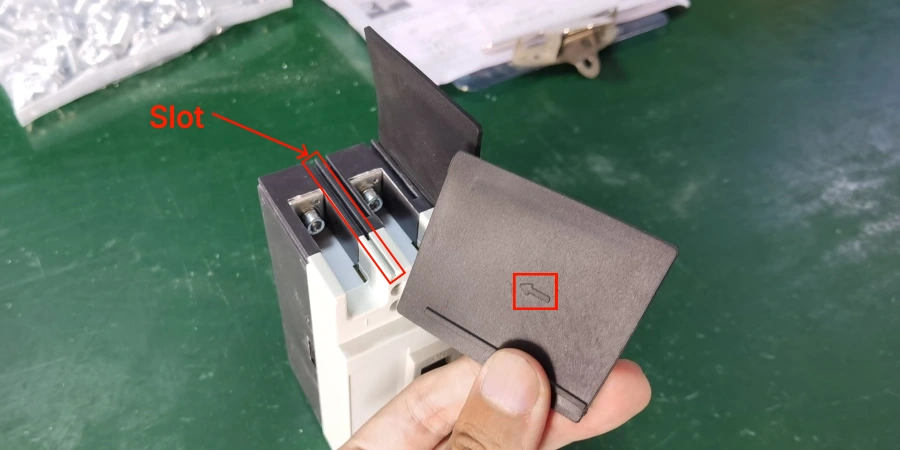
Installing them is also very easy. Take an mccb as an example. Find the slot on the breaker, then push the barrier in following the direction of the arrow on it, as shown below. That’s all it takes, even my grandmother could learn it within 5 seconds.
Other components work much the same way. For the exact steps, just follow what the instruction sheet says.
When Should I Install Interphase Barriers?
Many people think you can skip them when the voltage is low. Our view is simple: install them when they are needed, and don’t skip them just to save a little budget.
If electrical codes or the manufacturer say they must be installed, then install them as required. Even when there is no clear requirement, as long as the product supports them and they don’t get in the way of normal wiring, we still prefer to put them on. After all, it’s just a plastic part. It doesn’t cost much, so there’s no reason to leave it out.
Take our own MCCBs as an example. The interphase barriers come in the inner box with the product — two pieces as standard, and the cost is already included in the price. If a customer needs more, we can supply them separately for just a few tenths of a yuan each.
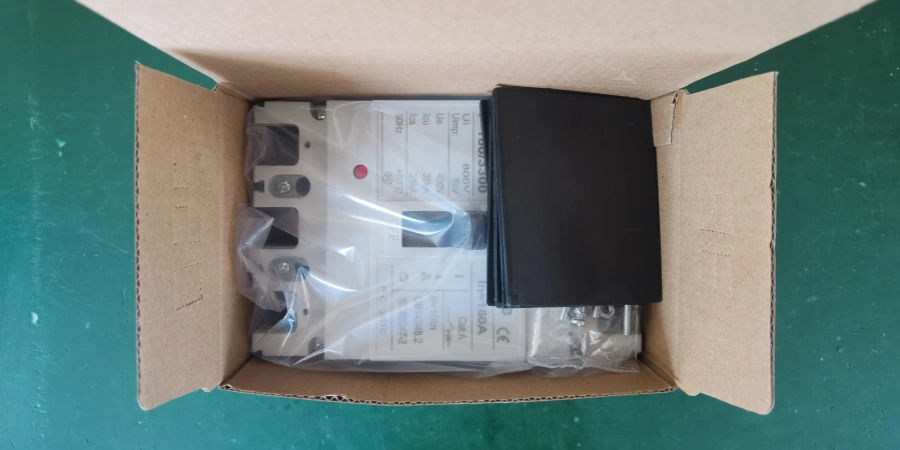
Different brands handle interphase barriers in different ways. Most Chinese manufacturers include them in the price and ship them with the product. Many overseas brands treat them as an optional accessory that has to be ordered separately.
This mostly comes down to product positioning and sales approach — neither way is necessarily better. When buying, just check which one applies to the model you’ve chosen.
When you buy, besides checking whether interphase barriers are standard and how many come in the box, also make sure the part matches the breaker. It’s best to buy from the original manufacturer. Don’t just look for something that looks similar and is cheaper.
Different manufacturers and different models of mccbs can have different terminal layouts and housing designs. The size, shape, mounting position, and material of the interphase barriers can vary too. Just because it seems to fit doesn’t mean it fits well, or that it meets the original design requirements.
This matters even more for bulk orders. Confirming the right model and supply quantity ahead of time can save you from mismatched parts and rework on site.
In the end, interphase barriers are a small accessory, but you still shouldn’t buy or install them carelessly. Install them when required. Make them standard whenever you can. When you need to buy them separately, confirm the original model first. You can compare prices, but don’t compromise on fit.
Do Interphase Barriers Affect Circuit Breakers’ Performance?
No. Interphase barriers do not directly raise a circuit breaker’s rated current, short-circuit breaking capacity, or trip performance. These values come from the breaker’s own design. You can’t change them by adding a plastic barrier.
The same idea applies to other electrical components. Contactors, disconnect switches, and fuses may also use interphase barriers or other insulating parts. These parts are not there to boost performance specs.
They are there to keep the installation safe and correct. So the rule is the same: if the manufacturer calls for them, install them. If the product supports them and they don’t get in the way of wiring, it’s usually better to use them.
When installing, also check that the part matches. A barrier that doesn’t fit right can get in the way of installation or wiring. That’s why it’s best to use the model made for your product by the original manufacturer.
Simply put, interphase barriers are not there to boost electrical performance. But when they are needed, they shouldn’t be left out.
Can Circuit Breakers Still Work Without Interphase Barriers?
Yes, they can. Without interphase barriers, a circuit breaker can still power up and still do its job of overload and short-circuit protection. But working normally doesn’t mean the installation is correct.
If they are not installed, the phase-to-phase insulation in the cabinet may not meet the original design requirements.
Think of it this way: a breaker without interphase barriers is like running around naked. It loses the insulation it is supposed to have. When dust, metal bits, or other bad conditions show up, the risk of a phase-to-phase fault can go up.
In the Chinese market, many mccbs have a label right on the front that says “install the interphase barrier before operation.” That label is the manufacturer’s installation requirement. Just follow it.

So when you install a circuit breaker, don’t just check whether it powers up. Also make sure the required accessories are all there. If interphase barriers are needed, install them. That step shouldn’t be skipped.
The same idea applies to other electrical components. Whether it powers up is one thing. Whether it is installed correctly is another. When you choose and install a product, confirm the right accessories up front, and you’ll save yourself a lot of trouble later.
Final Thoughts
Interphase barriers are small, but they shouldn’t be overlooked in the design and setup of electrical components. Knowing what they do can help you make better decisions when choosing products and planning a distribution system.
If you’re picking a component or planning a distribution cabinet, it’s worth checking the specific model and your application needs to see whether interphase barriers fit your project.