
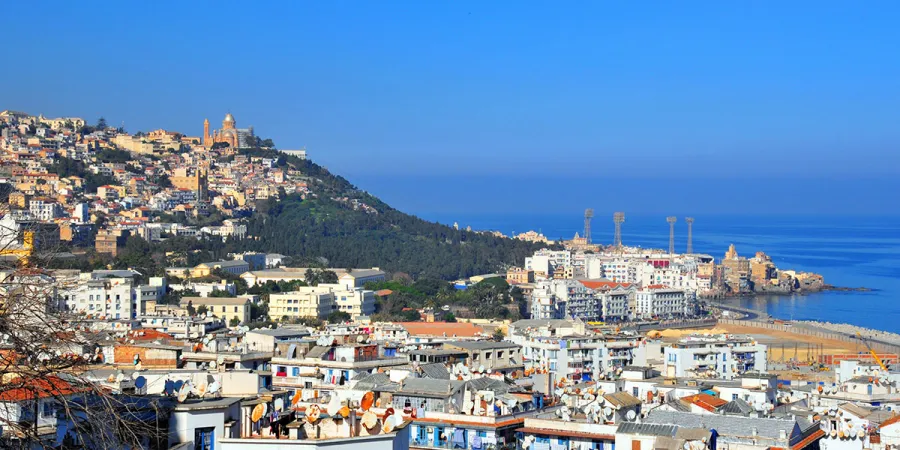
Not long ago, two buyers from Algeria visited our factory. While showing them our products, I casually asked: do you use many DC products in your market? They smiled and said not many. Solar there is mostly driven by government projects, they explained, and ordinary users rarely install it — electricity is just too cheap. Then they pulled out a calculator and converted their electricity price into RMB to show me.
Their electricity is even cheaper than in China, and that stuck with me. After they left, I googled and studied how their country’s power system actually works.
In our daily work, most of our time goes into replying to messages, quoting, and following up on orders. We rarely stop to understand the market our customers are in. But what they buy is often decided by that market, not by us. That’s what made me realize: understanding a customer’s market can matter more than replying to a few more messages.
How much does electricity cost in Algeria?
Algerian households pay somewhere around $0.041 to $0.042 per kilowatt-hour, based on figures from late 2025 (energy prices around the world). Businesses pay even less, at roughly $0.035 per kWh.
To put that in perspective, the residential rate is about a quarter of the global average, and less than a third of the average price across Africa.
What a typical bill looks like?
Numbers on a chart are one thing, but what does this mean for an actual household? A medium-sized apartment in Algeria might pay somewhere in the range of 5,000 to 6,000 Algerian dinars a month for electricity and water combined, which works out to roughly $40. Summer air conditioning pushes that number up, but even then, the total stays far below what a household in Europe or Australia would expect to pay for similar usage.
Algeria also uses a tiered pricing system for residential customers. You pay a lower rate for the first block of consumption each month, and the price climbs once you cross certain thresholds. On top of that, there is a 19% VAT. This tiered structure matters because it is designed to keep basic usage affordable while gently discouraging waste at higher consumption levels, at least in theory.
| Customer type | Approx. price (USD/kWh) | Approx. price (DZD/kWh) |
|---|---|---|
| Residential | $0.041–0.042 | ~5.65 |
| Business/Industrial | ~$0.035 | ~4.68 |
| Global average (reference) | ~$0.16–0.17 | — |
Numbers like these are why Algeria consistently ranks among the cheapest electricity markets on earth. But cheap doesn’t happen by accident, and understanding why gets you to the real story.
Why is electricity so cheap in Algeria?
The short answer is subsidies, built on top of an abundant supply of domestic natural gas.
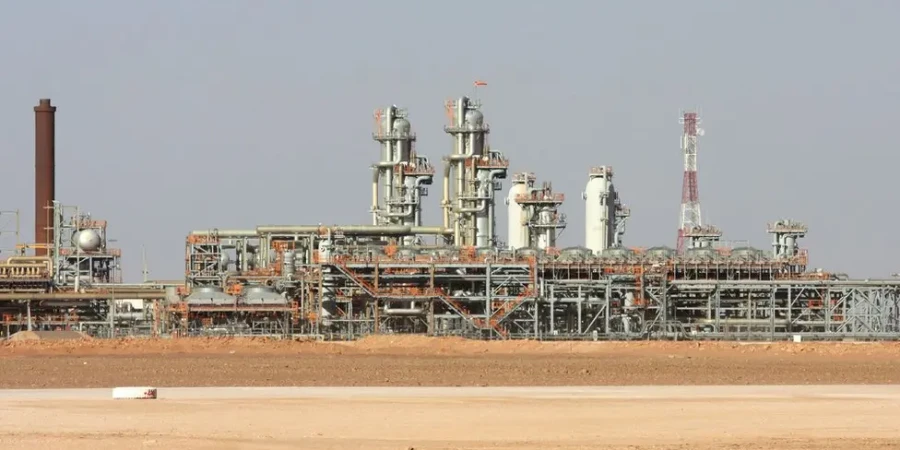
About 98% of Algeria’s electricity comes from gas-fired power plants, and according to Algeria’s energy minister, the government supplies that gas to generators at a heavily discounted rate — reportedly around 10.78 dinars per thermal unit, far below what gas fetches on international markets.
The gap between price and cost
Here’s where it gets interesting. In 2021, Algerian officials noted that the average price consumers paid was about 4.01 dinars per kWh, while the real cost of producing that electricity was closer to 5.4 dinars.
In some regions, especially in the south where diesel generation fills gaps that gas pipelines don’t reach, production costs can exceed 16 dinars per kWh. The government covers that difference. This is not a market setting its own price. It’s a policy choice, and one that comes with a bill attached, even if consumers never see it directly on their statement.
This regulatory approach is built into Algeria’s national electricity and gas frameworks. Bodies like CREG oversee these frameworks and set tariffs directly, rather than letting supply and demand determine them. That’s a meaningfully different system from markets where wholesale electricity prices swing with fuel costs and weather.
Why the government keeps prices this low?
Two goals drive this policy.
First, protecting the purchasing power of lower-income households, since electricity is treated as close to a basic necessity rather than a market commodity.
Second, supporting industrial competitiveness by keeping business electricity costs low enough that manufacturing and processing industries aren’t priced out compared to regional competitors (Nairametrics).
It’s worth mentioning that Algeria has also achieved close to universal electricity access across its population, which is a genuine achievement for a country of its size and geography (Trading Economics).
But keeping prices this low for this long is not free, and the trade-offs are worth understanding if you’re trying to read this market correctly.
What can we learn from Algeria’s low-price model?
Algeria’s approach shows both sides of the subsidy coin clearly. Cheap power protects households and supports local industry, but it also creates costs that show up somewhere else down the line, whether in the government budget, the grid itself, or the pace of the country’s energy transition.
The upside: affordability and industrial support
For everyday households, low tariffs mean electricity almost never becomes a source of financial stress the way it does in many other developing markets. Basic services stay accessible, and that matters in a country where income levels vary widely between regions.
On the business side, below-market industrial rates give local manufacturers a real cost advantage, and can support job creation in energy-intensive sectors.
The downside: fiscal strain and inefficiency
Selling electricity below what it costs to produce isn’t free, someone pays for it eventually. In Algeria’s case, that’s the state budget, which absorbs the gap between production cost and consumer price year after year.
This kind of persistent subsidy competes with other government spending priorities, and it becomes harder to sustain if gas revenues soften or global energy prices shift.
There’s also a behavioral cost. When electricity is this cheap, people have little financial reason to conserve it. Homes don’t get insulated as well, appliances don’t get upgraded as often, and peak demand keeps climbing without matching investment in generation capacity.
Multiply that across an entire population and you get steadily rising demand with a subsidy bill that grows right alongside it.
Why cheap power slows down private and renewable investment
Here’s a trade-off that doesn’t get discussed enough: when tariffs are set by policy rather than by cost, it becomes much harder to attract private capital into generation, grid upgrades, or renewables.
Investors look for returns tied to real market pricing. If the price a solar developer could charge for electricity is capped near $0.04/kWh by government policy, the payback math on new renewable projects gets a lot tougher, even in a country with excellent solar resources. This is a big part of why my customer’s comment made sense: solar in Algeria isn’t held back by sunlight, it’s held back by economics.
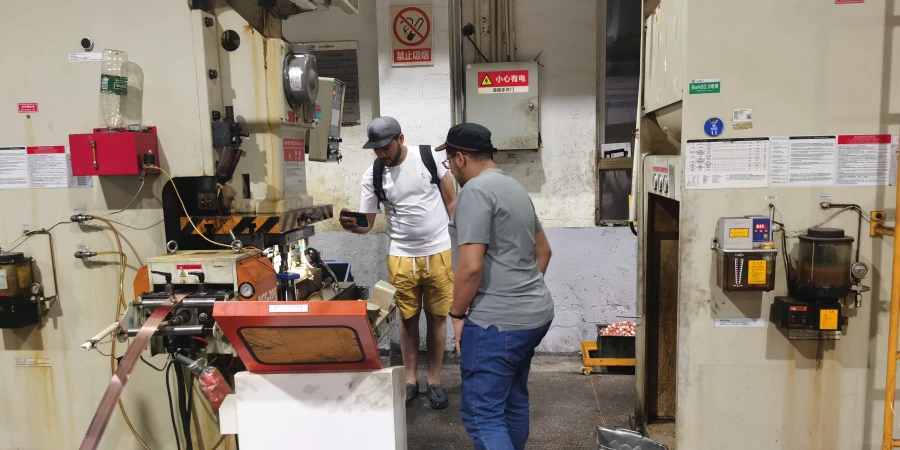
Even Algeria’s own policymakers seem to recognize this. There have been signs that tariffs may be restructured to improve efficiency while still protecting lower-income consumers — likely through more targeted, tiered “lifeline” pricing rather than cheap power for everyone.
| Approach | Benefit | Trade-off |
|---|---|---|
| Blanket low tariffs | Simple, protects all consumers | High fiscal cost, discourages efficiency |
| Tiered “lifeline” tariffs | Targets subsidy to low usage | Requires metering and monitoring |
| Cost-reflective pricing + cash transfers | Clearer fiscal accounting, better investment signals | Politically harder to introduce |
Practical lessons beyond Algeria
A few lessons apply well beyond Algeria. Tiered pricing protects a basic block of consumption, then charges closer to real cost above that level. This tends to be more sustainable long-term than blanket subsidies.
Targeted support, such as direct bill credits for lower-income households, is usually easier to budget for and manage than subsidizing every kilowatt-hour sold nationwide.
And when tariffs move closer to long-run marginal cost, they tend to open the door for private and renewable investment — as long as the transition is phased carefully so it doesn’t hit vulnerable households too hard.
What this means if you sell electrical products internationally?
This is where it gets practical for people in the electrical products business. Markets like Algeria don’t behave the way European or Australian markets do, and reading the energy pricing tells you a lot about what products will actually move.
DC products aren’t the priority yet, and that’s fine
It’s easy to assume that any market with strong sunlight and growing energy needs is ready for solar-related products like DC MCBs. Algeria is a good reminder that this isn’t always true.
When electricity is this cheap, households have almost no financial incentive to install solar, and the market for solar products stays limited to government-backed projects and a handful of larger installations in major cities.
For a supplier, that means AC products, and conventional electrical components remain the practical, high-volume focus for the time being.
Where the real long-term opportunity sits
That said, dismissing DC products entirely would be shortsighted. Subsidy-heavy models tend to face reform pressure eventually, especially as fiscal strain builds or global gas prices shift.
In fact, the state is already taking action. In May 2026, Algeria started running its first two large solar plants, each 200 MW. These are part of a 3.2 GW plan under the country’s goal of reaching 15 GW by 2035 (Algerian Radio). A 220 MW plant built by PowerChina was the first under this 3.2 GW plan to fully connect to the grid (PowerChina).
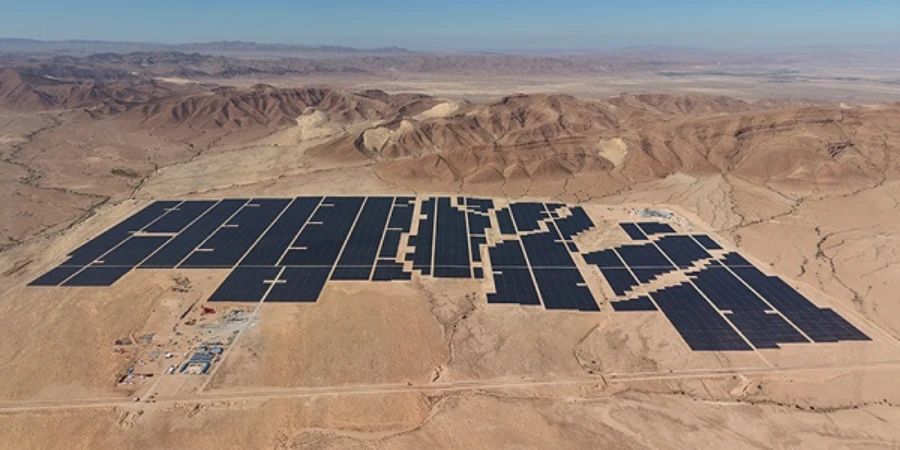
The government is also expanding the grid and looking at an IPP model to bring in private money. These are still government-led, large-scale projects, not demand from households. But they show that things are starting to move.
If Algeria moves toward more cost-reflective pricing over the coming years, even gradually, the economics of household and commercial solar start to make a lot more sense, and demand for DC related products grows with it.
Suppliers who understand this timeline, and who build relationships in these markets now rather than waiting for demand to spike, tend to be better positioned when that shift happens.
Reading energy policy as a sourcing signal
For buyers and suppliers working across gas-subsidized markets in North Africa and the Middle East, a country’s electricity pricing structure is a useful signal.
It shows how price-sensitive local demand is, which product categories are policy-driven versus consumer-driven, and roughly how far off large-scale distributed solar might be. That kind of context helps you make smarter product mix decisions long before a single container ships.
Working with import partners and local assemblers in these markets also means listening to what customers are actually asking for today, not just what seems logical on paper.
Algeria’s cheap electricity isn’t a market failure — it’s a policy choice with clear trade-offs. Understanding those trade-offs is what separates a supplier who reacts to demand from one who anticipates it.
Final Thoughts
Looking back at that calculator the customer showed me, it wasn’t just showing a price. It was showing a timeline.
$0.04/kWh means no ordinary household in Algeria has a reason to go solar today. DC products aren’t the main story yet. AC products still pay the bills. But the same number means the subsidy can’t last forever. When fiscal pressure builds and the solar plants start coming online, the price will move. And when it moves, demand shifts with it.
So the question isn’t whether to sell DC in Algeria. It’s when you plan to show up. Waiting for demand to spike and then chasing orders is following. Getting in now with local EPCs and importers is positioning.
Electricity prices are never just prices. They tell you where a market is going next.