
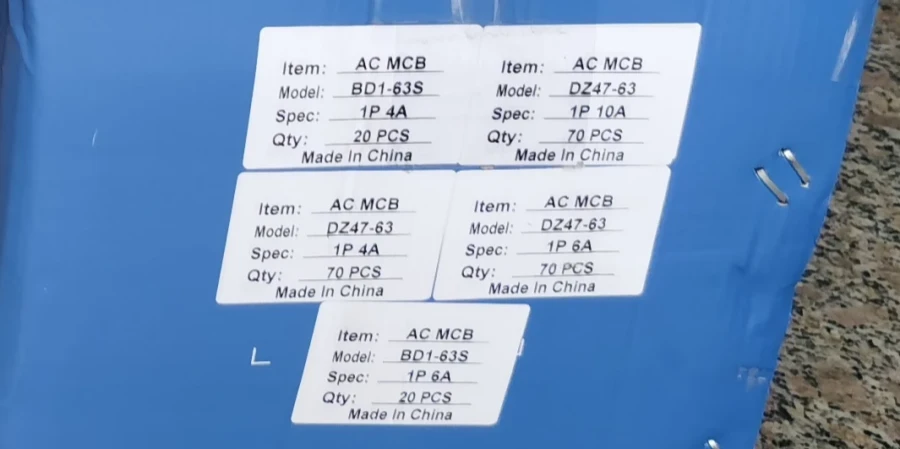
“Can I order a small batch of MCBs from China, or will factories turn me away because my quantity is too small?”
If this is your first time importing MCBs from China, the honest answer is: yes, you usually can. But which suppliers are willing to work with you, and what terms they offer, depends a lot on the type of supplier you’re dealing with and what exactly you’re looking to buy.
In the MCB land, “low MOQ” isn’t simply a matter of hitting a certain number. What counts as a small order can be very different depending on the supplier, the product, and the order itself.
What Counts As a “Low” MOQ When You’re Buying MCBs From China?
When people ask me about MOQ, they’re often picturing one number that applies across the whole industry. It doesn’t work that way. If you look across supplier listings, the range is wide — some suppliers advertise sample or trial-order minimums of just 1 to 10 pieces, while others sit at 50, 100, 200, or 1,000 pieces depending on the model and how the supplier runs their production.
If you use B2B platforms like Made-in-China or Alibaba and look at MCB suppliers, you’ll quickly notice that the MOQs vary a lot. Some suppliers list minimums of just 1 to 10 pieces, while others show 50, 100, 200, or even 1,000 pieces, depending on the model and the supplier.
However, the MOQ shown on a B2B platform does not always represent the actual minimum quantity for every order. Online listings are often designed to give buyers a general indication of the supplier’s preferred order size, while the final quantity may depend on factors such as stock availability, product configuration, and whether the item is already part of the supplier’s regular production.
So don’t treat the MOQ you see online as a hard rule. It’s usually just a starting point for the conversation.
Why the range is so wide?
Part of the reason is that “MCB supplier” covers very different types of businesses. A large-scale manufacturer running long production lines has different economics than a smaller producer or a trading partner working with a cluster of workshops.
The first group needs volume to make a production run worth setting up. The second group often keeps some finished stock on hand and can sell smaller batches without disrupting anything.
| Supplier type | Typical MOQ | Best for |
|---|---|---|
| Large branded factory | 5,000+ pieces | Bulk, standard-spec orders |
| Mid-size manufacturer | 500 – 2,000 pieces | Private label |
| Trading partner / cluster-based supplier | 10 – 500 pieces | Trial orders, small batches |
| Stock/inventory seller | 1 – 100 pieces | Samples, testing before commitment |
If your order is small, you’re simply better matched to the third or fourth row of that table than the first.
Why Some Suppliers Say Yes to Small Orders?
If you go directly to a major brand such as CHINT or Delixi and only need a small quantity, don’t be surprised if they ask for a proper MOQ. Their production is designed for standardized, high-volume orders, so small batches are usually not a good fit for the factory.
If you need to buy under an established brand but your order is relatively small, an authorized distributor or local agent is often the better route.
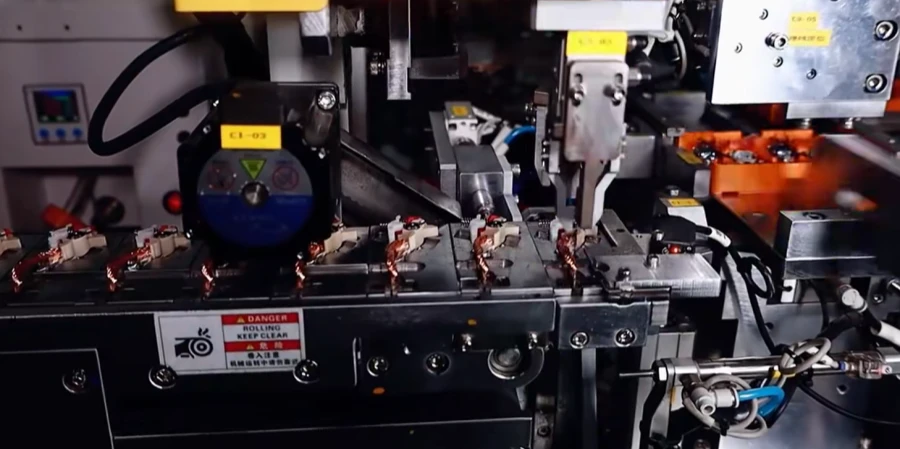
Smaller suppliers behave differently, and there’s a real reason for it. Most of us don’t hold large finished-goods inventory — we produce against orders.
Every time we switch to a different customer’s specifications, we have to change tooling and re-calibrate the line. That’s genuinely a hassle for small quantities, so a supplier who agrees to it is usually doing it because they want the long-term relationship, not because it’s easy. Suppliers know that too, which is why the ones actively trying to grow are often the most flexible on quantity.
You can improve your odds of a yes when you:
- Choose a standard, already-existing model instead of asking for a new configuration
- Accept the supplier’s normal housing color, terminal style, and packaging
- If possible, mix different ratings within the same product series instead of ordering a small quantity of just one specification.
- Frame it clearly as a trial order with the intention to reorder after testing
- Accept a slightly higher unit price in exchange for the smaller batch
In practice, you’ll find that many smaller and mid-size suppliers are willing to be flexible on MOQ, especially when you explain that you’re placing a trial order and plan to reorder if everything goes well.
When You Should Expect The Minimum to Climb?
A low MOQ has limits, and it’s worth knowing where they sit before you negotiate. The moment your request moves from “give me your standard product” to “build something specific for me,” the situation changes for the supplier.
Expect a higher minimum if you ask for:
- Your own logo on the product, especially if it requires a new printing plate
- Custom printed packaging
- A specific, trip curve, or rated current outside standard offerings
- New tooling or altered internal components
- Certificates issued under your own brand name
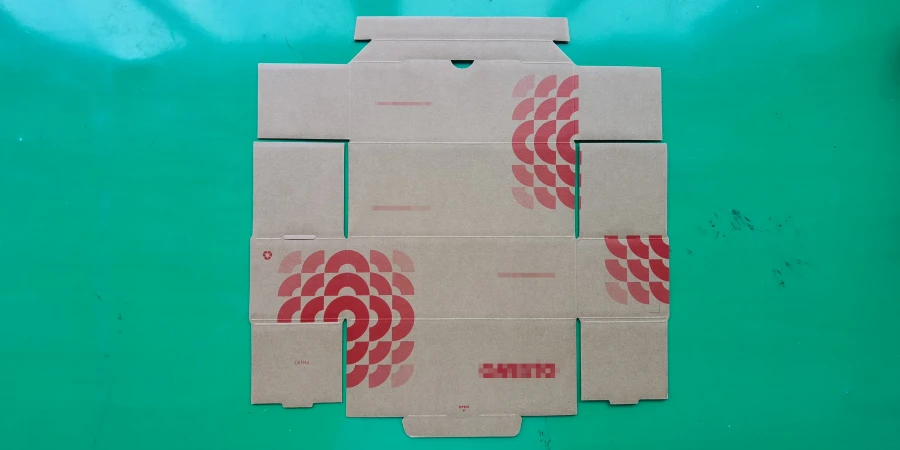
None of this is arbitrary. Tooling changeovers and line recalibration take real time, and a supplier taking on those extra costs for a tiny batch may find the order difficult to justify unless they see potential for a longer-term relationship.
General guidance on sourcing from China points to the same pattern: stock goods keep MOQs low, while custom packaging or branding pushes the number up, and paying a bit more per unit or sticking with standard materials is a common way to bring the minimum back down.
| Request | Effect on MOQ | Why |
|---|---|---|
| Standard model, standard packaging | Stays low | No tooling or line change needed |
| Custom current rating or trip curve | Rises significantly | Requires re-tooling or new testing |
| Private label | Rises moderately | Extra setup and packaging steps |
| Mixed ratings, same series | Stays manageable | Same base tooling, different settings |
If you’re weighing whether to push for a custom spec on your first order, it’s often smarter to start standard, prove the relationship works, and layer in customization once trust is established.
Don’t Let a Low MOQ Distract You From Safety And Compliance
An MCB isn’t a decorative part. It’s a safety-critical component that protects people and equipment from overload and short-circuit conditions, so a low price or a small MOQ should never be the only thing you’re evaluating.
Before you pay for any order, no matter how small, request:
- A full datasheet covering rated voltage, current, poles, trip curve, and breaking capacity
- Genuine test reports and certificate numbers you can verify, not just a logo printed on the housing
- Clear photos or video of the production label and carton markings
- A pre-shipment inspection, or independent lab check, for your first commercial batch
- Confirmation of which certification your target market actually requires — CE-related requirements typically apply across Europe, while other regions have their own rules, so this depends on where you’re selling
This is also where a supplier’s certification portfolio matters more than people expect. A factory holding a full ISO management system alongside CB, CE, RoHS and SAA product certificates has already done the compliance groundwork that lets you sell into Europe, the Middle East, or Australia without scrambling for paperwork later. That’s worth checking before quantity ever enters the conversation.
It’s also worth asking what certification a supplier does not hold, and why. Not every certificate applies to every market, and a supplier who explains clearly which regions their paperwork covers — and which it doesn’t — is usually more trustworthy than one who claims to cover everything.
If you’re selling into a market with its own specific requirement, such as UL in North America, ask directly whether the supplier holds it rather than assuming a broad certification list covers it automatically. A supplier who’s upfront about the gap saves you a costly surprise at customs later.
Building Toward a Long-term Supplier Relationship
Here’s something worth keeping in mind on your side of the table too: agreeing to a small first order costs a supplier something, and most of us do it because we’re investing in a relationship.
Trust between a buyer and a new supplier doesn’t happen in one transaction — it builds order by order, as documentation checks out, quality holds, and delivery dates are met.
If your first batch goes well, don’t be surprised if your second and third orders come with more flexibility, faster replies, and better pricing than your first one did. That’s normal, and it’s also a reason to treat your trial order as a genuine test rather than just the cheapest way to get parts.
The photo at the top of this article is actually from a recent order for a customer in the Middle East. It was only a few hundred pieces, but we still took the order. That’s not unusual when the product is standard and the order makes sense for both sides. Sometimes a small first order is simply the beginning of a much longer relationship.
A simple message to start with
If you’re ready to reach out, keep your first message specific and easy to quote against:
Hello, I’m interested in a trial order of your standard MCBs. Please quote for [quantity] pcs of [1P/2P], [current ratings], [B/C/D curve], and [breaking capacity]. Please let me know your MOQ and price. If everything looks good, we can discuss the next steps.
Send that message to several suppliers, compare the specifications and certificates first and the price second, and always order samples before committing to a full production run. A low MOQ gets your foot in the door — the paperwork and the sample results are what tell you whether it’s a door worth walking through.
Final Thoughts
A low MOQ is simply a way to start a working relationship with less risk on both sides.
Once that first order goes smoothly — clear specs, timely payment, straightforward communication — you become someone the supplier knows and trusts. And on your next quote, that trust often translates into better terms.