
When you’re planning to import MCBs from China, there are plenty of things to consider when evaluating a supplier. Price and lead time are obvious ones, but manufacturing capability can be harder to judge from the outside.
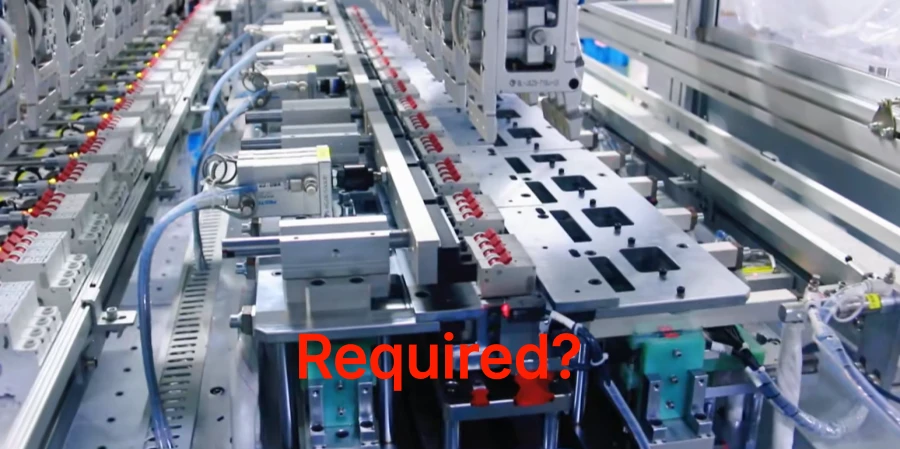
One thing you’ll often come across is automation. A supplier may show you an automated production line, a highly automated workshop, or videos of machines assembling MCBs at impressive speed. And naturally, it can make you think: this must be a sign of a better manufacturer.
But is it?
Automation matters, but it’s not the whole story. What does an automated line actually tell you about an MCB manufacturer? Where does it really make a difference, and where can it give you a misleading impression? Let’s take a closer look.
Why Automation Comes Up So Often in MCB Importing?
When you’re buying something as safety-critical as a circuit breaker, you’re really buying consistency. Every unit needs to trip at the right thermal threshold, hold the right current, and interrupt a fault the same way every time. That’s why some customers keep circling back to the same question: how does the factory make sure unit 1 performs the same as unit 10,000?
Automation is one answer to that question, and it’s a fair one to ask about. A manual assembly line depends heavily on the skill and consistency of individual workers doing tasks like riveting, fitting bimetal strips. An automated line reduces the amount of human judgment involved in those steps, which lowers the chance of small inconsistencies creeping in.
The real concern behind the question
What customers are usually worried about isn’t the machinery itself. It’s whether the factory can hold a tight tolerance across a large order. Small variations in contact pressure or bimetal calibration might not show up in a sample of 10 pieces, but they can show up as a defect rate once you’re running 5,000 or 10,000 units through your own customers’ equipment. That’s the actual risk you’re trying to manage, and automation is just one tool that helps manage it.
In Yueqing, where a large share of China’s MCBs are made, automation has become an increasingly common part of how suppliers present their manufacturing capabilities.
For well-known manufacturers such as CHINT, Delixi, and TENGEN, automated production lines are more or less standard. Given their large production volumes, automation is a natural part of how these factories maintain production efficiency and consistency.
Smaller factories, meanwhile, often look to these larger manufacturers as a benchmark. Having automated production lines can also be seen as a symbol of manufacturing strength and investment. That’s not necessarily a bad thing, but it does mean you should treat automation as one data point, not the whole answer.
What an Automated MCB Production Line Actually Involves?
Before you judge a supplier on this, it helps to know what “automated” actually covers, because the term gets used loosely.
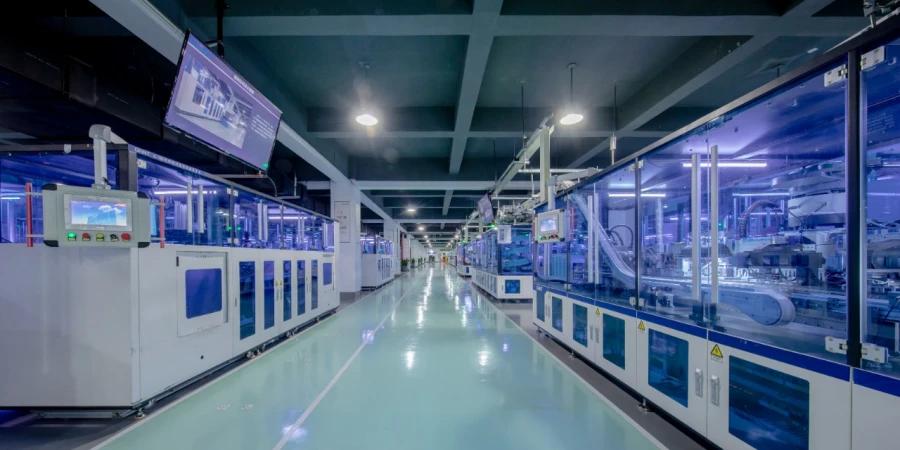
A modern line typically combines automatic component feeding, contact welding or riveting, mechanism assembly, torque control, calibration, final electrical testing, and QR code marking for traceability into one continuous process, with MES recording data at each stage.
That last part, the recording of data, is often more valuable to you as a buyer than the automation itself. A line that assembles parts quickly but doesn’t record test results at each stage isn’t giving you much more assurance than a well-run manual line with good final inspection.
Automation is a spectrum, not a switch
No factory becomes fully automated overnight. Automation is a gradual process: starting with manual work, moving to semi-automated stations for more error-prone steps, and eventually reaching full automation when production volume and investment justify it.
When a supplier tells you they’re “automated,” you could ask which steps specifically. Feeding and riveting are common early automation targets. Final electrical testing and calibration are often the last steps to get automated, and honestly the ones that matter most for MCB reliability.
| Production Step | Manual Risk | Benefit of Automation |
|---|---|---|
| Contact riveting/welding | Inconsistent pressure, weak joints | Uniform pressure, fewer weak contacts |
| Bimetal strip assembly | Variable thermal trip calibration | Tighter trip curve tolerance |
| Torque control | Loose or over-tightened parts | Repeatable torque values |
| Electrical/trip testing | 100% manual testing is possible, but results depend more on operator consistency | More repeatable testing with automatic data recording |
| Marking and traceability | Manual logging, gaps in records | Automatic batch/lot recording |
Where Automation Helps and Where It Doesn’t Guarantee Quality
Here’s where I want to push back a little on the idea that automation alone solves your quality problem. A highly automated factory can still ship you a bad product if the raw materials are weak, the mechanism design is off, or the testing standards are loose. Automation controls consistency in the assembly process, but it doesn’t fix a poor bimetal alloy or an undersized contact.
Manufacturers with automated lines generally do report lower defect rates and more stable output, and that’s a real advantage for large-volume buyers who need predictable supply. But that advantage only shows up when automation is paired with proper testing, calibrated equipment, and a real quality system behind it. Machinery without discipline just produces consistent mistakes faster.
Matching the factory to your order size
This is something I tell customers directly, and it comes from years of sitting across the table from both large factories and small workshops here in Yueqing: automation tends to matter more as your order volume grows.
If you’re placing a trial order of a few hundred pcs, a smaller manual-assembly workshop can often give you better pricing, faster turnaround, and more flexibility on non-standard specs, because they’re not built around massive minimum order quantities.
If you’re placing a repeat order in the tens or even hundreds of thousands, an automated line becomes genuinely valuable because it’s the only realistic way a factory holds tolerance at that scale without ballooning labor costs. Large factories with automation exist because large customers need them.
Small workshops with skilled manual assembly exist because plenty of buyers don’t need that scale and value flexibility more. Neither one is actually the “better” supplier. It depends on what your business actually needs right now.
What Matters More Than the Automation Question Alone?
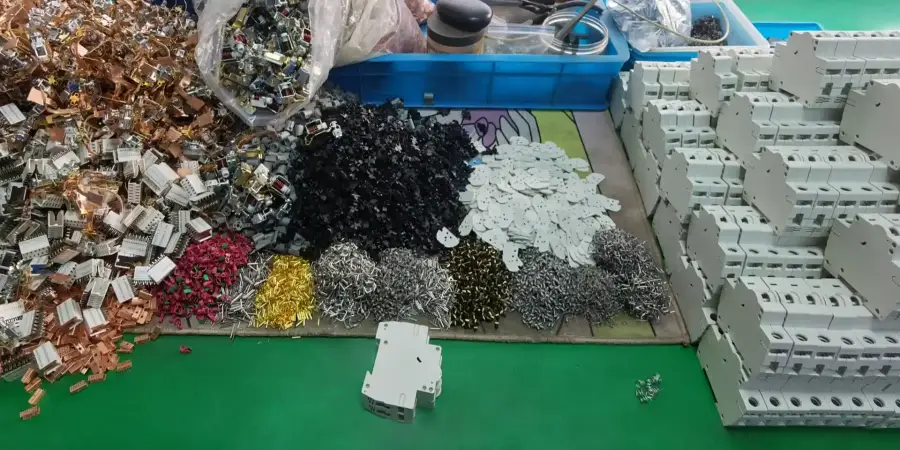
If I had to rank what actually protects you as an importer, automation would not be at the top of the list. Verified compliance and test evidence matter more, because a certificate you can independently confirm tells you far more than watching a machine run on a factory tour.
| Import Criterion | Why It Matters |
|---|---|
| Correct standard for your market | IEC 60898-1 generally applies to residential-type installations, while IEC 60947-2 covers industrial breakers |
| Verifiable third-party certificates | A logo on a datasheet proves nothing; confirm directly with the issuing body |
| Type-test evidence | Ask for type test reports covering thermal/magnetic trip curves, dielectric withstand, and breaking capacity for your exact model |
| Routine production QC | Incoming material checks, in-process inspection, and batch sampling matter regardless of automation level |
| Lot traceability | Each batch should trace back to production date, materials, and test data |
This is really the practical rule I give customers: you’re paying for verified electrical performance, not factory inside appearance. Automation is a supporting signal, not the deciding one.
What to Ask Your Supplier Instead of “Is Your Line Automated?”
Asking about automation directly usually gets you a yes, whether or not it’s the full picture. A better approach is to ask questions that force a specific answer instead of a general claim. This is the exact list I’d hand a customer who’s serious about vetting a factory.
Start with these seven questions:
- Which specific steps are automated — component feeding, contact welding, riveting, calibration, high-voltage testing, trip testing, final inspection?
- Which electrical tests happen on every single unit, and which are only checked by batch sampling?
- Can you provide batch-level test records with lot or serial traceability?
- Does the IEC/EN/UL certificate match the exact brand, factory address, model family, pole count, current range, curve, and breaking capacity you’re ordering?
- Can you share the original type-test report so I can verify it directly with the testing body?
- Can I inspect the factory myself or send a third party to audit before the first large order?
- What’s your process if you switch a contact alloy, bimetal strip, mechanism supplier, or plastic housing?
Why the Wording Matters?
Notice none of these questions can be answered with a simple yes or no the way “are you automated” can. Question 7 in particular tends to catch out suppliers who look good on paper. A factory that changes a bimetal supplier without re-testing the trip curve can quietly ship you a product that no longer matches its original certification, automated line or not.
Getting a real answer to question 3, about batch-level traceability, tells you more about a factory’s actual quality discipline than watching their assembly line run for ten minutes during a visit. Anyone can show you a clean-looking workshop. Not every factory can hand you a report showing which shift and which raw material batch produced the units in your last container.
Matching Your Buying Decision to Your Order Size and Risk
The right answer to “how much does automation matter” really depends on what kind of order you’re placing and how much is riding on it.
I break this down into three practical categories for customers, based on what I’ve seen work and not work.
| Order Type | Automation Priority | What Actually Protects You |
|---|---|---|
| Small trial order | Low to medium | Sample testing, certificate verification, clear communication |
| Repeat or private-label bulk order | Medium to high | Factory audit, documented QC plan, lot traceability, pre-shipment inspection |
| Safety-critical or regulated project | Automation claims alone are not enough | Accredited independent lab testing, exact destination-country approval confirmed |
For a small, low-risk trial order, an automated line is a nice-to-have. What actually protects you is verifying the certificate, testing a sample batch yourself, and confirming the supplier communicates clearly about specs. A smaller workshop with strong manual quality control can serve this kind of order just as well, often with more flexibility on non-standard requests.
For a repeat or private-label bulk order, the situation changes. Now you need a documented QC plan, real lot traceability, and ideally a pre-shipment inspection before every container ships. This is where automation starts to pull its weight.
For safety-critical or regulated projects, don’t take automation claims or even a supplier’s own test reports at face value. Confirm the exact approval required in your destination country, and use an accredited independent lab to verify performance where the stakes justify it. MCB quality assurance consistently points back to IEC-based testing and traceable component control as the real foundation, not the presence of automated machinery on its own.
A Note From the Supplier Side
I want to add something here that I don’t think buyers hear often enough. Building an automated line isn’t actually the hard part for a factory in Yueqing.
There are local companies here that specialize in exactly this kind of line development, with ready-made solutions.(e.g. BENLONG) Any factory can automate if there are enough customers willing to support with enough order volume. It comes down to economics: without buyers committing to that scale, an automated line just ends up underused in the workshop, which is its own kind of waste.
That’s also why automation isn’t a fair measure of whether a supplier is good. If it were the deciding factor, every overseas buyer would already be sourcing exclusively from the biggest factories, and workshops running manual assembly would have closed years ago. That hasn’t happened, because plenty of buyers care more about flexibility, non-standard specs, and cost than about watching a machine run.
Final Thoughts
Automation can tell you something about a factory, but it can’t tell you everything. The right supplier is the one whose capabilities match your product, order size, and quality requirements.